















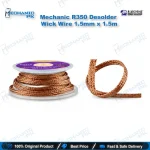
Mechanic R350 Desoldering Wick 1.5mm x 1.5m
₨ 1
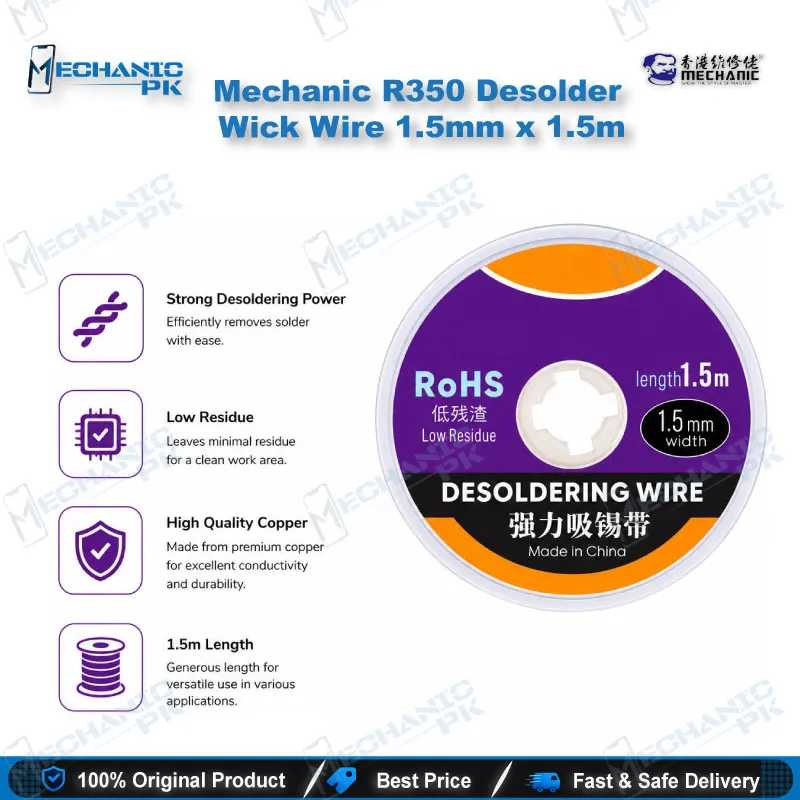
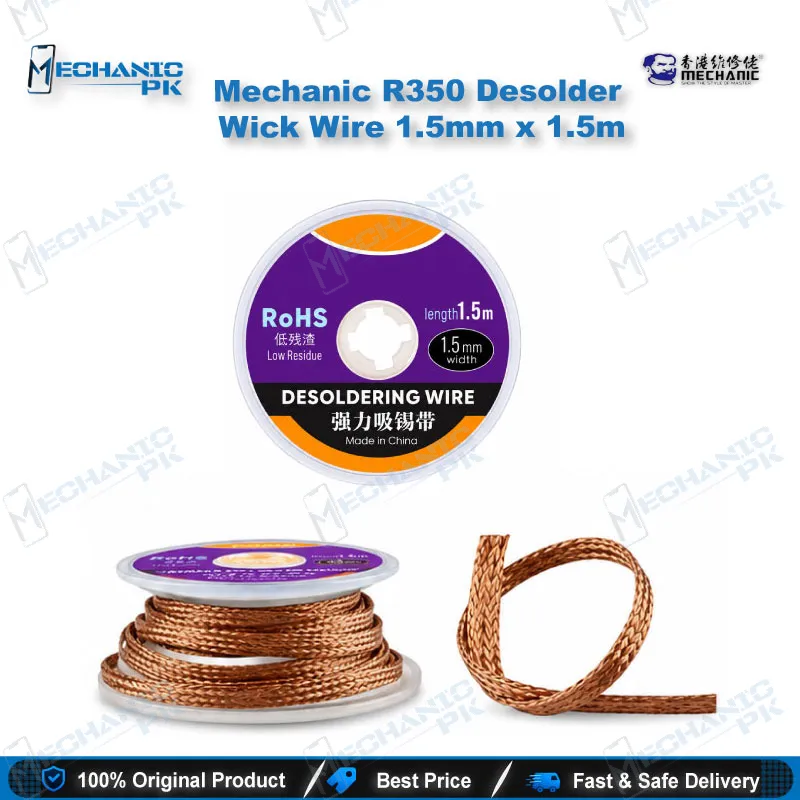
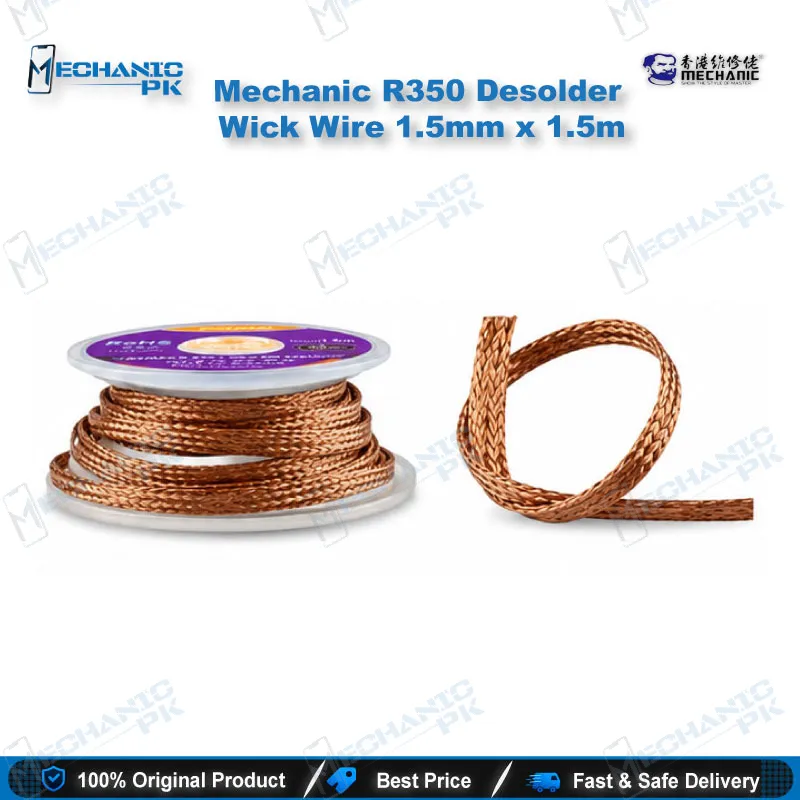
Mechanic R350 Desoldering Wick 1.5mm x 1.5m for Repair Benches
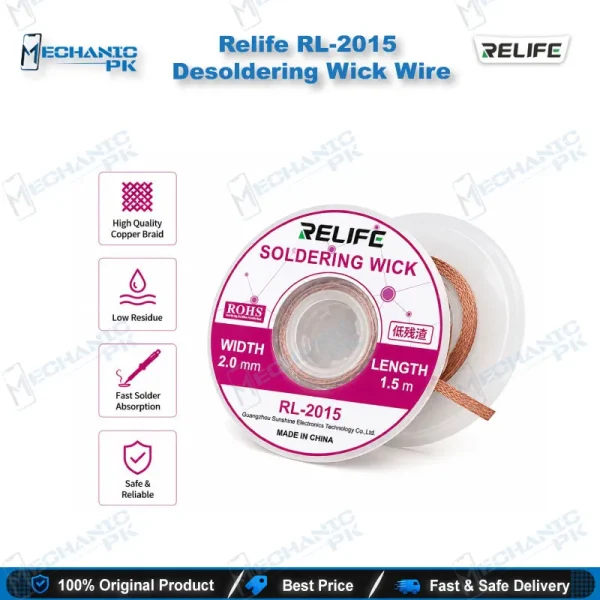
The Mechanic R350 is a braided copper desoldering wick measuring 1.5 mm wide and 1.5 m long. Its low residue braid lifts excess solder from pads, jumpers and through-hole leads, which makes it a practical pick for phone board work where a clean pad matters more than speed. The copper strands resist oxidation, so the braid stays ready on your bench between sessions. Use it with a heated iron and a little flux to clear bridged pins on BGA packages, remove leftover tin before reballing, or tidy up surface-mount components. At roughly 8 g per package, it fits easily into a technician’s tool drawer.
Desoldering Wick for Mobile Repair: Mechanic R350 1.5mm x 1.5m
A desoldering wick for mobile repair earns its place on any bench that handles phone motherboards. The Mechanic R350 1.5mm x 1.5m braid draws molten solder off pads and leads through capillary action, so you clear excess tin without lifting a fragile trace. Your workflow usually starts with a heated iron, a fresh coat of flux and a short length of braid laid over the joint. Once the solder climbs into the copper strands, lift the wick away and inspect the pad under magnification. The 1.5 m length gives you enough braid to work through several joints before you need to cut a fresh section.
Where This Wick Fits in Your Board-Level Workflow
Board-level repair rarely starts with a clean slate. You often inherit a phone with bridged pins around a charging IC, solder blobs left behind by a previous technician, or a component that refuses to lift because the joints are flooded. A braid like the R350 handles that cleanup stage before any new part goes on the board. It works on pads, jumpers and through-hole leads, so you can use the same length across several tasks on one job. Keep the wick for the cleanup pass, not the removal pass, and your pads will stay in better condition for the work that follows.
Setting Up a Clean Desoldering Pass on Phone Boards
Start by checking your iron tip. A tip that is worn or coated with oxide will transfer heat poorly, and the braid will simply sit on the joint without pulling solder. Apply a small amount of fresh flux to the joint, then place the wick flat across it. Press the iron onto the braid, not directly onto the pad, and wait for the solder to climb into the strands. Move to a clean section of braid as it saturates. Lift the wick and iron together so the copper does not drag solder back onto the joint. Repeat until the pad shows a thin, even layer of tin.
Caring for the Braid and Avoiding Pad Damage
Pad damage usually comes from too much heat, too much pressure or too much time on one spot. Keep contact brief and check each joint after a single pass, instead of cycling the iron repeatedly over one area. Store the wick in a dry drawer, away from humidity, and cut off any section that has gone dull or contaminated with old flux. Clean the braid of residue between jobs, because stale flux reduces absorption. Treat the wick as a consumable, and your repair bench will produce cleaner pads with less rework.
| Weight | 0.1 kg |
|---|
Key Features
- Braided pure copper construction
- Anti-oxidation and anti-corrosion finish
- Low residue braid for cleaner pads
- 1.5 m length for multiple joints per roll
- 1.5 mm width for fine pitch and small pads
- Solder wick remover type for board-level work
- Lightweight package of about 8 g
- Suited to phone BGA and surface-mount repair
Specifications
| Brand | Mechanic |
|---|---|
| Model | R350 1515 |
| Category | Desoldering Wick (Solder Wick Remover) |
| Compatibility | Universal, not device-specific |
| Supported Devices | Universal, not device-specific |
| Technology | Braided copper solder wick with low residue |
| Material | Copper |
| Dimensions | 1.5 mm width x 1.5 m length |
Common Repair Uses
- Removing excess solder from BGA pads before reballing
- Clearing bridged pins around a charging IC
- Cleaning solder blobs left by a previous repair
- Tidying pads after a component removal
- Clearing jumper areas before a new connection
- Removing tin from connector pins on a phone board
- Preparing pads for a replacement SMD component
- Cleaning up short circuits found during board diagnostics
Compatible Devices
- Universal, not device-specific. Scope covers any surface-mount or through-hole solder joint your iron can reach.
- Phone BGA packages during pad cleanup
- Charging and power IC pads on mobile motherboards
- Surface-mount resistors and capacitors
- Through-hole pins and connector leads
- Jumper and bridged pin areas on phone boards
- SMD ICs in general board-level work
- Pads prepared for reballing or new component fitting
- Electronics repair benches handling mixed component sizes
FAQ
What is the product name?
What is the brand of this product?
What is the model of this product?
What is this product used for?
Which devices are compatible with this product?
Who should use this product?
Can this wick be used for BGA pad cleanup before reballing?
Does the wick need fresh flux before use?
Related products