
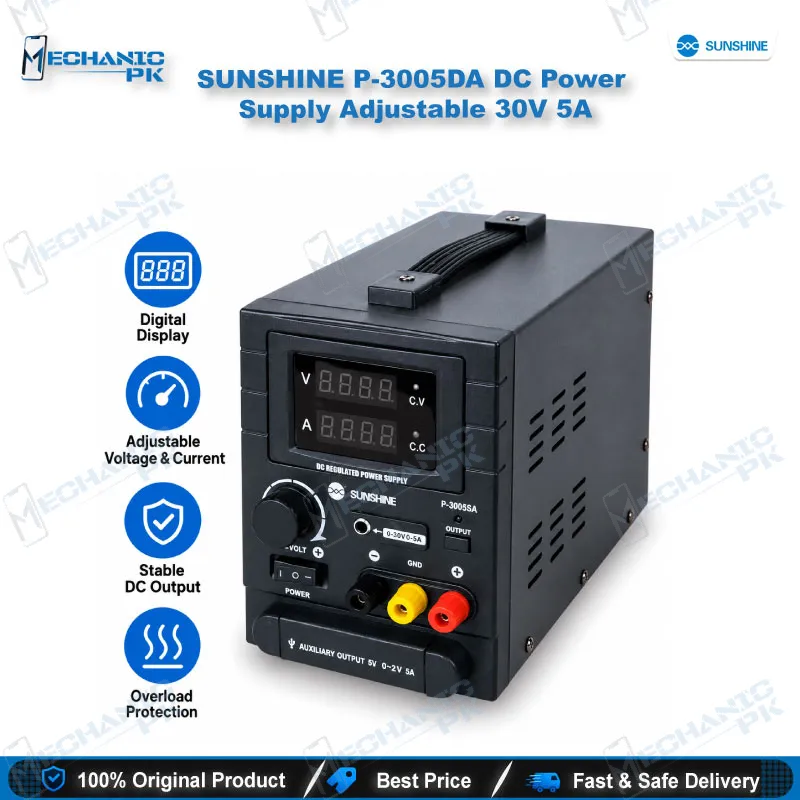


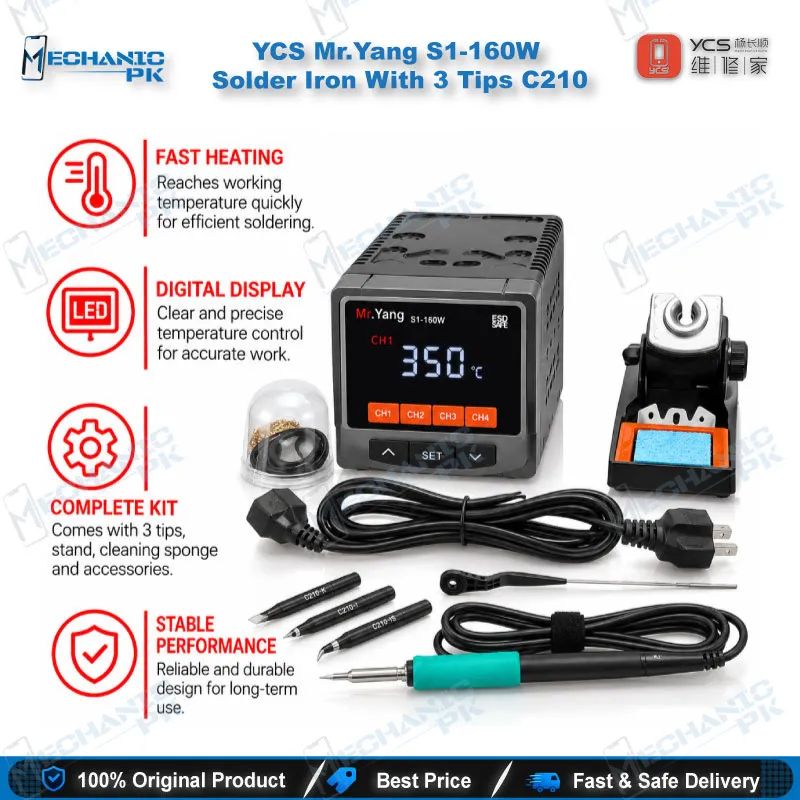












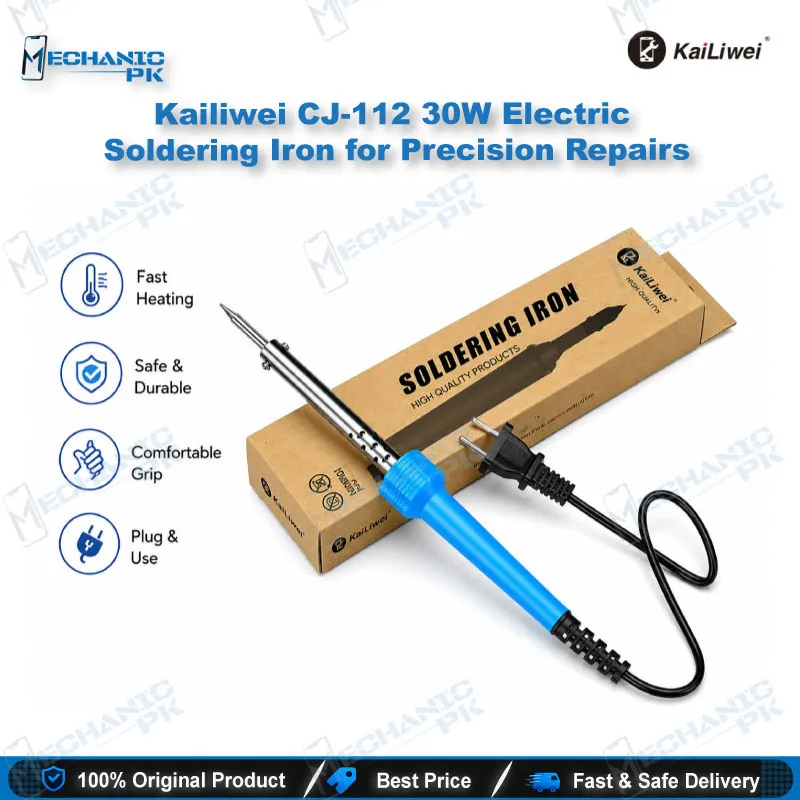
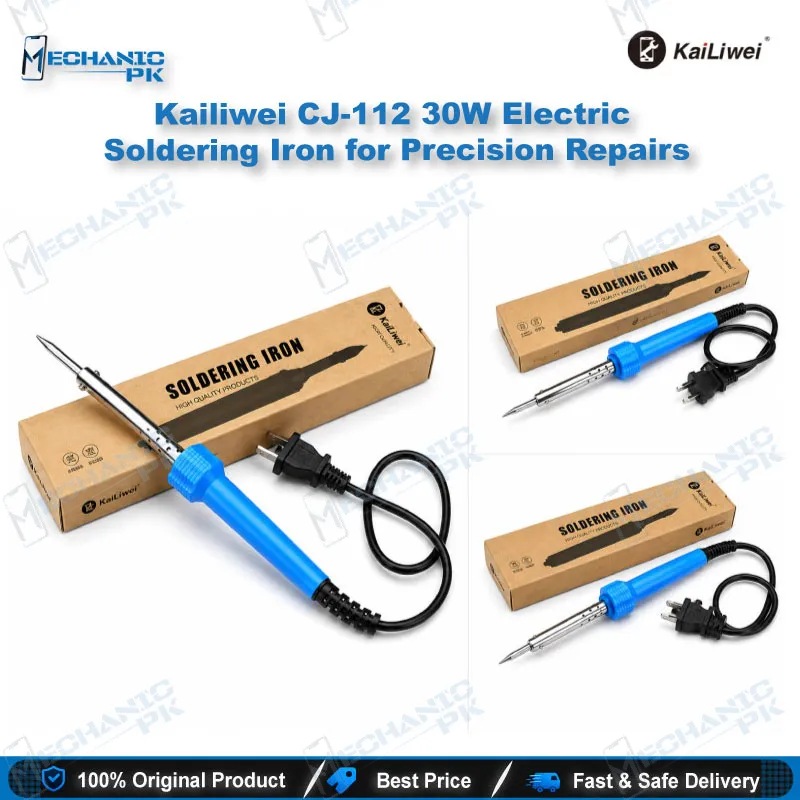
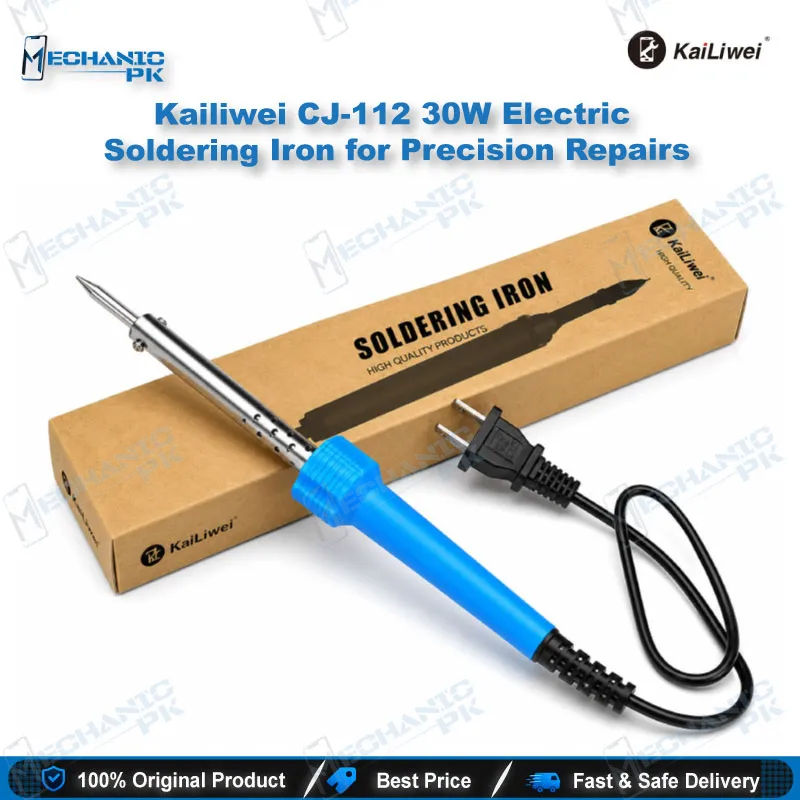
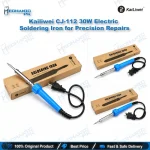
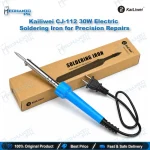
Kailiwei CJ-112 30W Electric Soldering Iron
₨ 600
Kailiwei CJ-112 30W Precision Soldering Iron
The Kailiwei CJ-112 30W soldering iron gives mobile repair technicians a low-wattage electric iron for fine, controlled work. At 30W, it suits small solder joints, jumper wires, connector pads, and component touch-ups where heat control matters more than raw power. You keep it on the bench beside your hot air station for the jobs a blower overheats: charging port pads, flex connector joints, and trace repairs on dead phone boards. It handles daily workshop soldering for Android and iPhone boards, and it works as a dedicated precision iron for apprentices learning board-level repair. Pair it with a microscope and a PCB holder for clean, repeatable results.
In stock
Kailiwei CJ-112 30W Soldering Iron for Precision Board Repair
The Kailiwei CJ-112 30W soldering iron targets one job in the repair workflow: delicate joint work that a hot air station or a high-wattage iron handles badly. A 30W rating keeps heat input modest, so you can reflow a small pad, tack a jumper, or touch up a connector without cooking the surrounding board. Technicians across Pakistan’s repair markets keep a low-wattage iron on the bench for this reason, even when they own a full soldering station.
Where a 30W Iron Fits in Your Repair Workflow
Board-level repair splits into heat-heavy and heat-light tasks. Hot air stations and preheaters handle BGA ICs, shields, and large ground-connected components. A 30W iron takes over once the job narrows to individual pads and wires. Jumper lagana on a broken trace, resoldering a loose charging port pin, and fixing a lifted battery connector pad all fall in this second group. On a hardware fault like a charging issue or a display problem, you often find the failure at a single joint, and a precise iron fixes it without disturbing neighboring parts.
Technical Framing: What 30W Means on a Phone Board
Wattage sets how much heat the iron can deliver to a joint. Low wattage suits small thermal mass: signal pads, thin traces, flex connector pins, and test points. Large copper pours, metal shields, and ground planes pull heat away fast, and those areas need more power or a preheater. Match the tool to the thermal load. Use this iron where you want gentle, controlled heat, and move to your soldering station or hot air station for heavy-mass joints. This approach protects pads from lifting and keeps trace damage low, which matters most on dead after flash boards and water-damaged PCBs where traces already run thin.
Pairing the Iron With Your Bench Setup
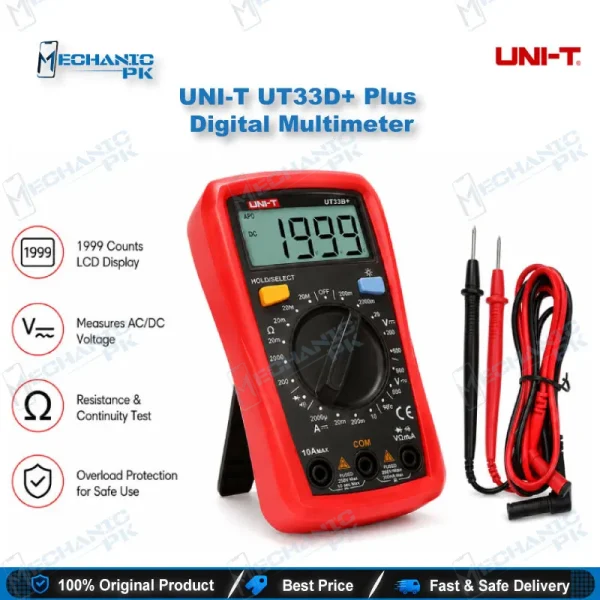
Precision work needs support equipment. Mount the board in a PCB holder so both hands stay free, and use a microscope to inspect each joint before and after soldering. Keep a multimeter nearby to confirm continuity after every jumper you lay, and check your repair with a test box or programmer when the fault involves charging or boot behavior. If your workflow also covers IC change karna on eMMC or UFS chips, pair this iron with your reballing kits and hot air station: the hot air tool removes and places the chip, and the CJ-112 cleans up and repairs the small pads around it.
Why Technicians Add a Dedicated Precision Iron
Many workshops run one high-power station for everything and then damage fine pads with it. A separate 30W iron keeps your main station free for heavy jobs and gives apprentices a safer tool to learn on. You also gain a backup tool when your primary station is busy or down. For repair shops buying multiple benches, a compact iron like this one costs little and covers the precision tasks every technician performs daily. Check current stock and pricing on the Mechanicpk product page.
| Weight | 0.25 kg |
|---|
Key Features
- 30W power rating for low-heat, controlled soldering
- Electric soldering iron format for bench use
- Suited to fine pads, small joints, and jumper wires
- Complements hot air stations by covering low-mass joints
- Works alongside microscopes and PCB holders for precision jobs
- Practical secondary iron for shops that run a main soldering station
- Useful learning tool for technicians building board-level skills
- Covers charging issue and display problem repairs at connector level
Specifications
| Brand | Kailiwei |
|---|---|
| Model | CJ-112 |
| Category | Electric Soldering Iron |
| Compatibility | Universal – not device-specific |
| Power Rating | 30W |
Common Repair Uses
- Precision soldering at the pad, wire, and connector level
- Jumper lagana on broken traces
- Charging port pin resoldering
- Battery connector pad repair
- Flex connector joint touch-up
- Clean-up of pads after IC removal
- Speaker and microphone wire soldering
- Test point wiring for diagnostics
- Training and practice soldering for apprentices
Compatible Devices
- Universal soldering tool – not tied to specific phone models; it works on any board where fine soldering is needed
- Android phone motherboards (Samsung, Oppo, Vivo, Infinix, Tecno)
- iPhone series logic boards (pad and connector-level work)
- Charging port sub-boards
- Flex connector pads and battery connectors
- Small PCBs and daughter boards
- Test points and jumper pads
- Earphone, speaker, and vibrator motor contacts
- General electronics and wiring repair
FAQ
What is the product name?
What is the brand of this product?
What is the model of this product?
What is this product used for?
Which devices are compatible with this product?
Who should use this product?
Is a 30W soldering iron enough for mobile phone board repair?
Can I use this iron instead of a hot air station for IC change karna?
Related products