















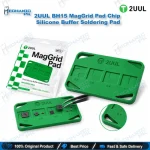
2UUL BH15 MagGrid Magnetic Silicone BGA Reballing Pad
₨ 1,199
2UUL BH15 Magnetic Reballing Pad
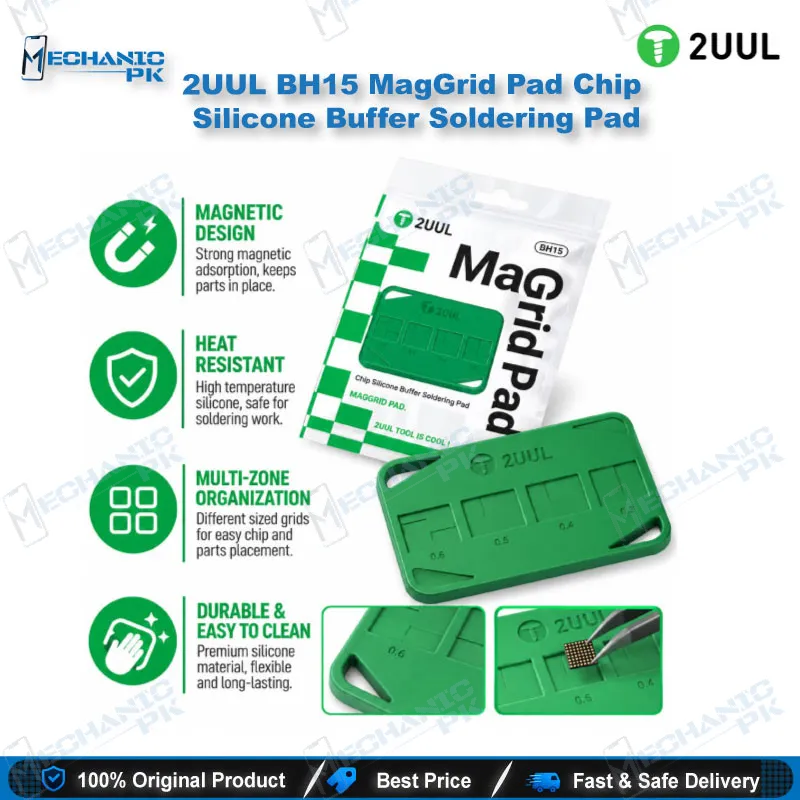
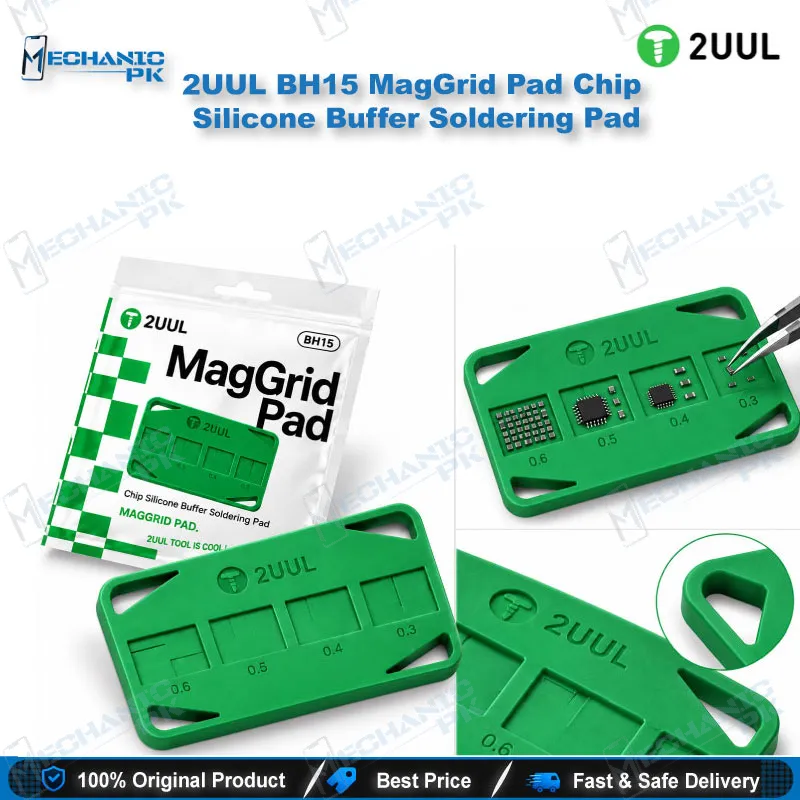
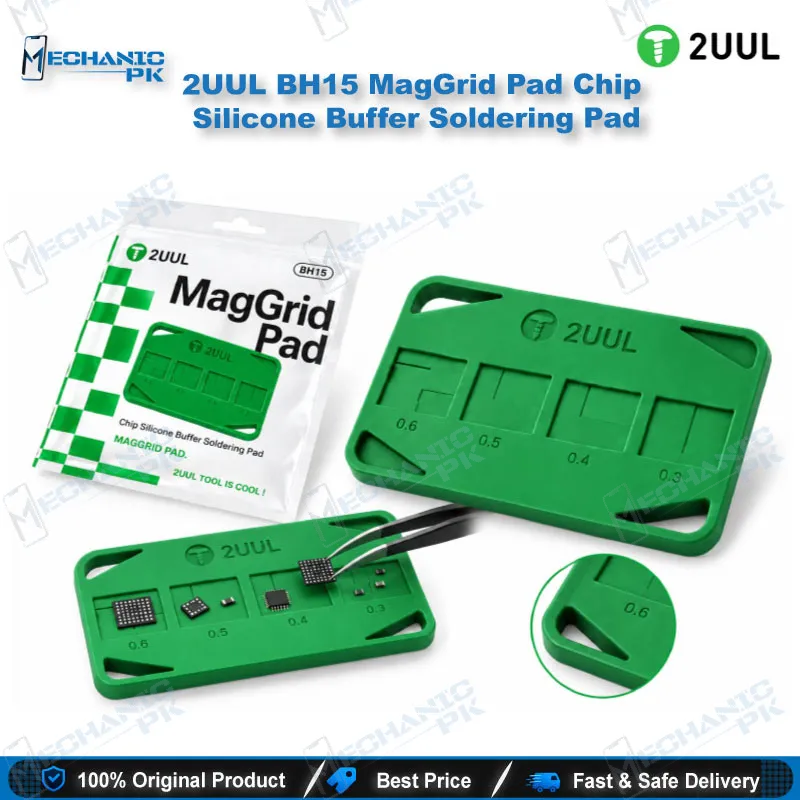
The 2UUL BH15 MagGrid is a magnetic silicone BGA reballing pad for phone CPU, NAND flash and general BGA chip work. It measures 104 x 80 x 8 mm and weighs 65.5 g, so it fits a compact repair bench. Strong magnetic adsorption holds your steel stencil in place. The soft, heat-resistant silicone body cushions the chip during tinning and reballing. Both hands stay free for paste, balls and hot air. Use it for IC change karna jobs, hard disk BGA repair and micro-soldering. Technicians across Pakistan pick it to stop stencil drift and avoid redoing reballing work.
Out of stock
Magnetic Silicone BGA Reballing Pad for Stable Stencil Work
The 2UUL BH15 MagGrid is a magnetic silicone BGA reballing pad that gives your stencil and chip a steady seat while you tin and reball. It measures 104 x 80 x 8 mm and weighs 65.5 g net. It combines a soft silicone body with strong magnetic adsorption. If your bench handles phone CPU, NAND flash and general BGA chips every day, this pad replaces improvised tape and clamps with a base that fits the job. Pakistani technicians who run hot air reballing sessions will notice the difference in stencil control from the first chip.
Magnetic Grid Technology and Stencil Control
Stencil drift ruins a reballing job. A stencil that slips even a fraction of a millimetre leaves misaligned solder balls, and you end up cleaning the chip and starting over. The curved BH15 surface and its magnetic grip hold a steel BGA stencil firmly against the chip, so the stencil stays put while you spread paste or place balls. Your hands stay free, which matters when you hold tweezers in one hand and a hot air nozzle in the other.
The grip also keeps tin planting consistent from one chip to the next. You repeat the same setup on every board instead of re-taping the stencil and re-checking alignment under the microscope. On a busy bench, that saved time adds up across dozens of CPU and NAND jobs per week.
Heat-Resistant Silicone Body and Care
The silicone body is soft, elastic and heat resistant. It cushions the chip instead of scratching it, and it survives repeated heat cycles from hot air stations and soldering stations. The surface has a natural tackiness that grips your bench, so the pad stays where you place it. Flux residue wipes off with isopropyl alcohol on a lint-free cloth, which keeps the surface clean for the next IC.
Let the pad cool fully after each hot air session before you store it flat. Keep sharp tweezer tips away from the silicone, because a nick lets flux collect and stops the stencil from seating evenly. Pair the pad with a stable hot air station and a good set of reballing kits, and you cover the whole tinning routine from one compact platform.
Where It Fits in Your Repair Workflow
Every IC change karna job follows the same stages: lift the chip, clean the pads, reball, then place and reflow. The BH15 supports the reballing stage for mobile CPU, NAND flash and other BGA packages behind a dead phone or a hardware fault on the main board. When a phone goes dead after flash and you trace the fault to a damaged NAND package, you reball that chip on a stable pad before it goes back on the board.
Use a microscope to check ball alignment after tinning, and keep your PCB holders nearby for the main board while the loose chip sits on the pad. The pad also suits hard disk BGA chips and small-component micro-soldering, so it earns its bench space across more than one job. At 104 x 80 mm, it sits beside your microscope and soldering station without crowding them. Each pack contains one silicone pad, so you can buy a second for another bench or a trainee.
| Weight | 0.25 kg |
|---|
Key Features
- Magnetic grid adsorption holds the BGA stencil in place
- Curved silicone surface for a seamless, hands-free fit
- Soft, elastic silicone cushions the chip during tinning
- Heat-resistant body survives repeated hot air and soldering cycles
- Natural tackiness gives anti-slip grip on the bench
- Easy to clean after flux and solder work
- Compact 104 x 80 x 8 mm footprint
- Lightweight 65.5 g body, easy to move between stations
Specifications
| Brand | 2UUL |
|---|---|
| Model | BH15 MagGrid |
| Category | BGA Reballing Pad / Silicone Soldering Buffer Pad |
| Compatibility | BGA reballing stencils, mobile phone CPU and NAND flash chips |
| Supported Devices | Mobile phone CPU, NAND flash IC, BGA chips, hard disk chips |
| Technology | Magnetic grid adsorption with curved silicone surface |
| Material | Heat-resistant silicone |
| Dimensions | 104 x 80 x 8 mm |
| Weight | 65.5 g (net) |
Common Repair Uses
- Reballing, tinning and chip-holding work on the repair bench.
- BGA reballing of phone CPUs
- NAND flash IC reballing
- Chip tin planting with a BGA stencil
- IC replacement and precise alignment (IC change karna)
- Hard disk BGA chip repair
- Micro-soldering of small components on circuit boards
- Hands-free stencil holding during hot air work
- Chip buffer protection while soldering
Compatible Devices
- Universal for BGA-package chips. The pad holds the chip and stencil, so it does not tie to a phone brand or model.
- Mobile phone CPU (BGA package)
- NAND flash ICs
- General BGA chips on phone and PCB boards
- Hard disk BGA chips
- Steel BGA reballing stencils
- Universal use, not device-specific
FAQ
What is the product name?
What is the brand of this product?
What is the model of this product?
What is this product used for?
Which devices are compatible with this product?
Who should use this product?
Can the 2UUL BH15 hold a BGA stencil without tape?
What size and weight is the 2UUL BH15 MagGrid pad?
Related products