
















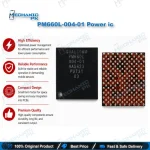
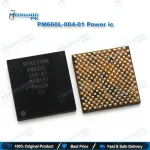
PM660L-004-01 Power IC for Snapdragon 636/660 PMIC Repair
₨ 200
PM660L-004-01 Power IC – Qualcomm Secondary PMIC
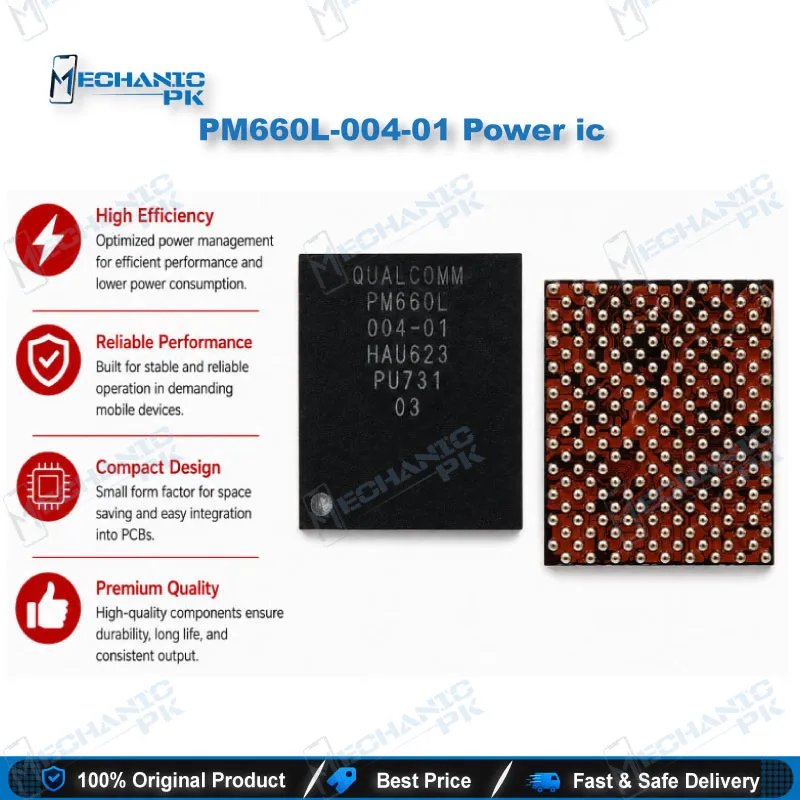
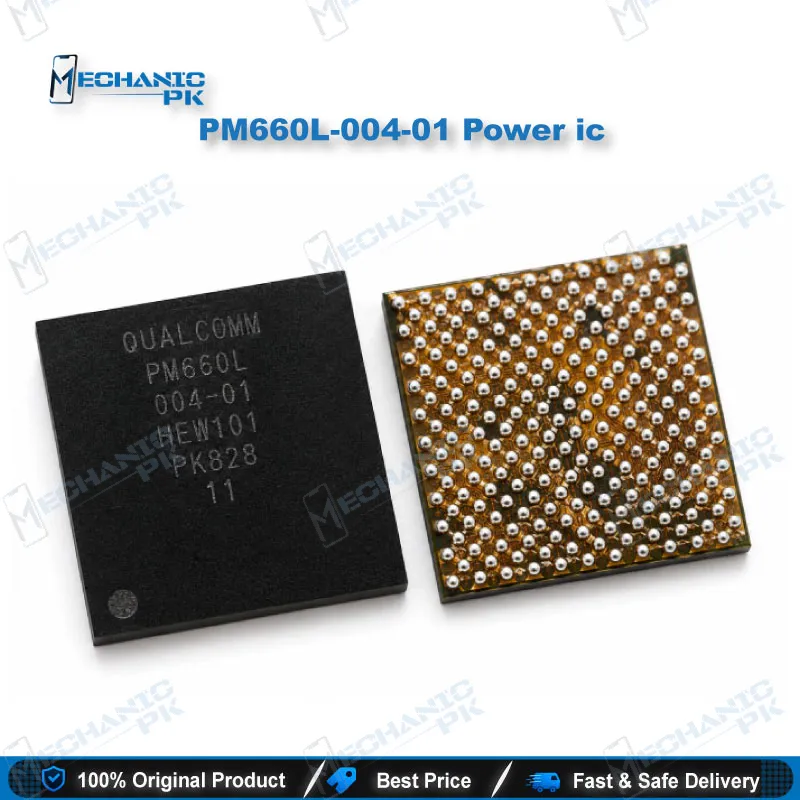
The PM660L-004-01 Power IC is the Qualcomm secondary power management chip that works in tandem with the PM660 on Snapdragon 630, 636, and 660 boards. It supplies five switch-mode regulators, ten LDOs, a Buck-or-Boost regulator, and dedicated display bias rails. Board-level technicians use it to restore dead phones, shorted output rails, and display power faults on popular Xiaomi, Nokia, and Asus models. Match the full 004-01 top marking against the original chip before you order. Mechanicpk supplies this PMIC for professional BGA rework, so your bench stays ready for Snapdragon 636 and 660 power-section repairs.
PM660L-004-01 Power IC: Secondary PMIC for Snapdragon 636 and 660 Boards
The PM660L-004-01 Power IC is the Qualcomm secondary power management chip that pairs with the PM660 on boards built around the Snapdragon 630, 636, and 660 platforms. When a phone on one of these chipsets reaches your bench as a dead phone, stuck on logo, or showing no image on a known-good screen, this chip belongs on your suspect list. Mechanicpk supplies this PM660L power IC for technicians who trace rails with a multimeter and need a correct-marking replacement rather than a generic substitute. Before you order, match the full top marking, including the 004-01 suffix, against the chip on the board.
Where the PM660L Power IC Sits in the Power Architecture
Qualcomm splits power delivery on these platforms between two chips. The PM660 handles the larger share of low-dropout rails, while the PM660L provides five switch-mode regulators (S3 and S4 operate as one combined phase), ten LDOs, and a Buck-or-Boost (BoB) regulator. The PM660L also carries specialized regulators for the display path, which the Linux kernel manages through its LAB/IBB driver. In practice, this chip feeds display bias, peripheral loads, and parts of the system power sequence. A fault inside it can halt the boot sequence completely or kill specific functions while the phone still powers on.
Fault Symptoms That Point to This Snapdragon 660 PMIC
Several patterns justify measuring the PM660L rails. A dead phone drawing abnormal current on the DC power supply, a short on one of its output rails, a phone that hangs on logo after liquid damage cleanup, and a display problem that survives a screen swap all lead back to this area. Diode-mode readings on the output capacitors around the IC give you a fast comparison against a healthy board. A rail reading close to zero points either to a shorted capacitor or to an internal short inside the PMIC. Remove the suspect capacitor first; if the short stays on the rail, the PM660L becomes the prime suspect.
Replacement Workflow on the Bench
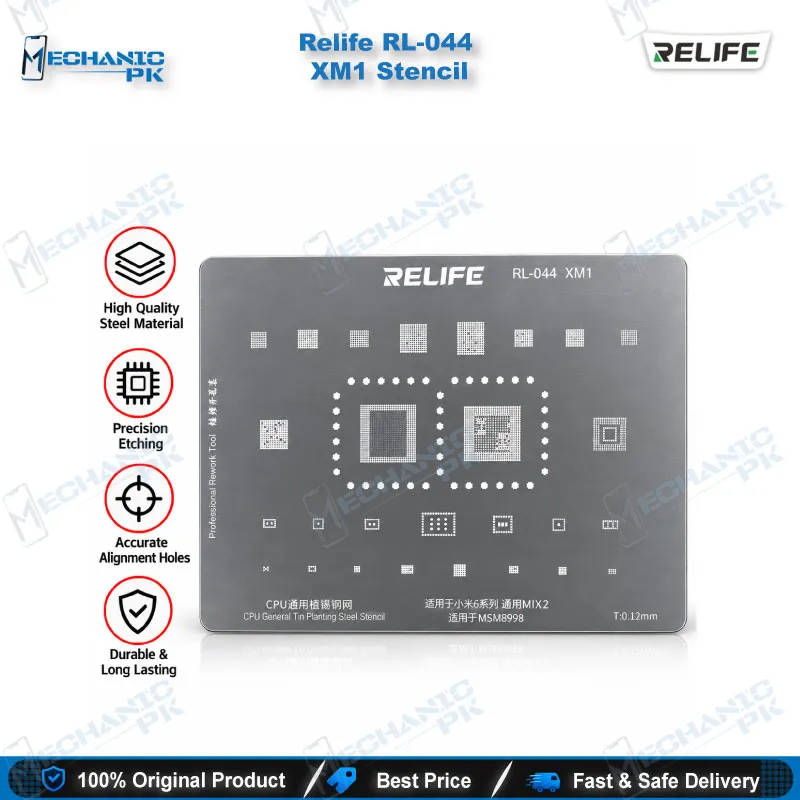
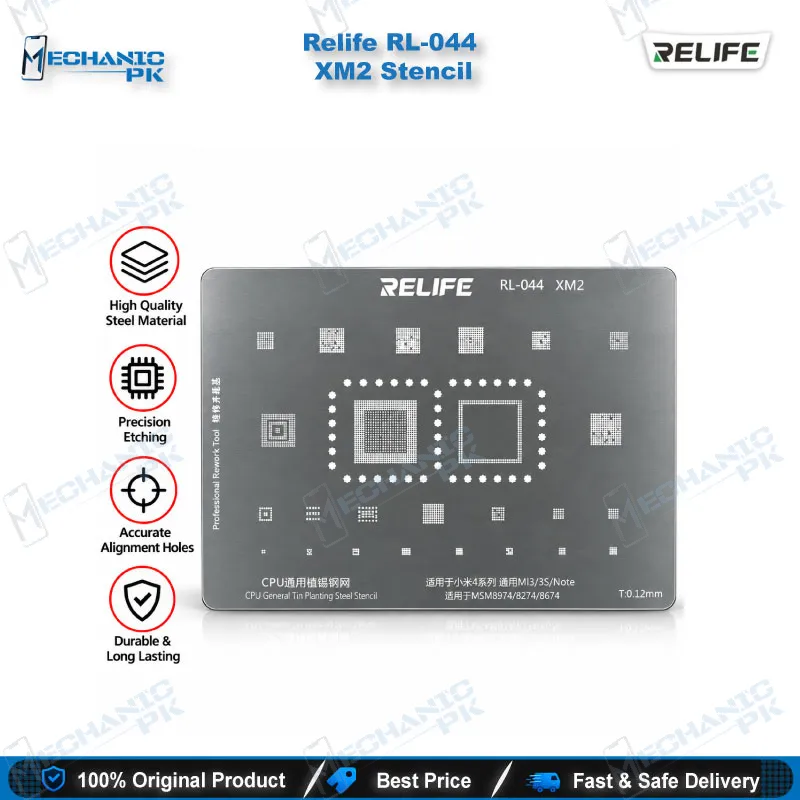
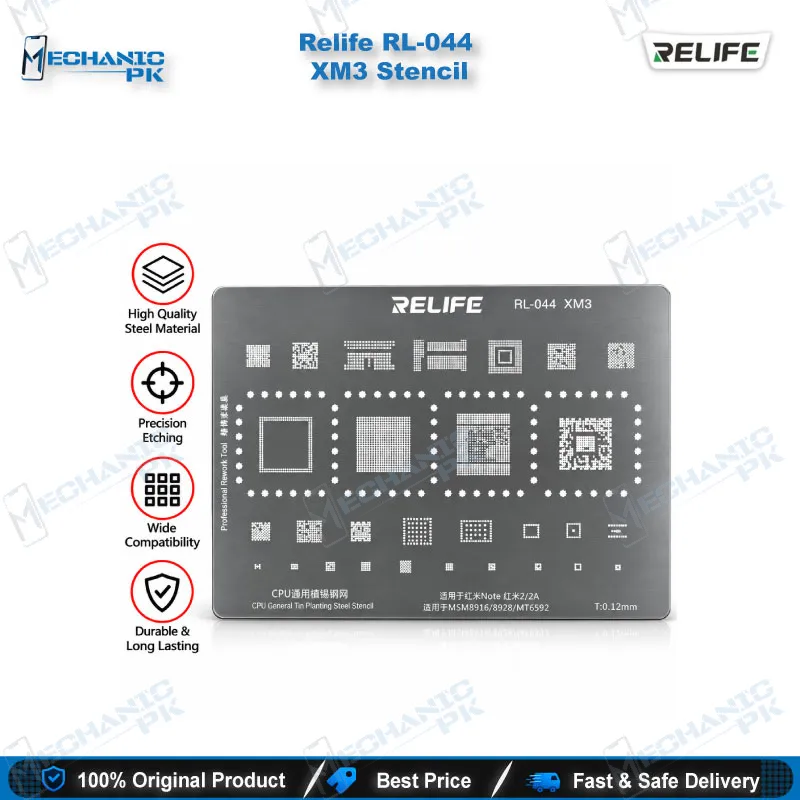
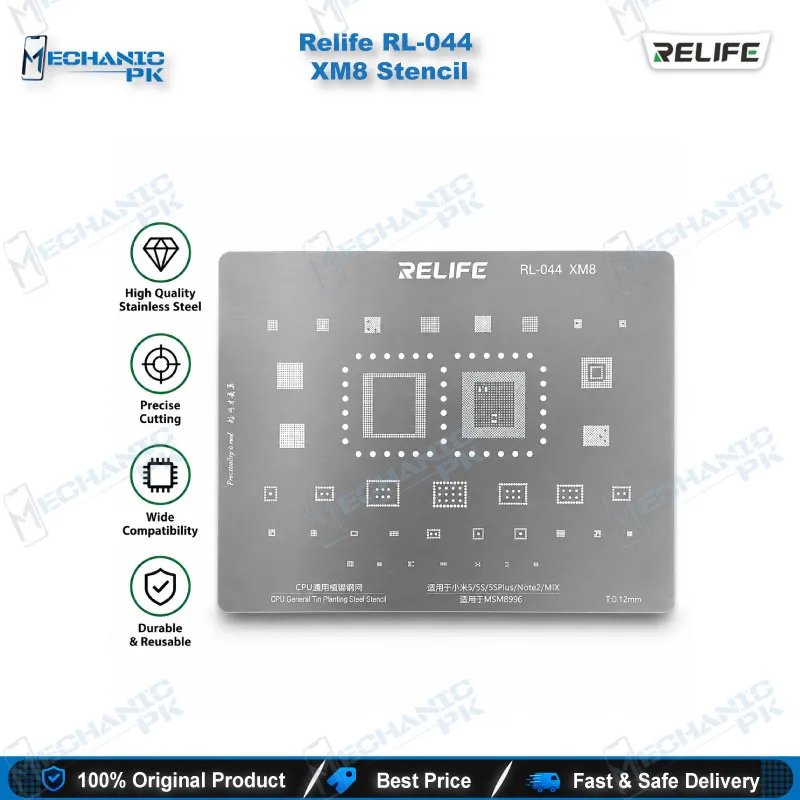
Treat this chip as a BGA rework job. Secure the board in a PCB holder, shield nearby plastic connectors and the SoC area, and apply quality flux before heating. A temperature-controlled hot air station lets you lift the old IC without disturbing neighboring passives, and a soldering station with a flat tip and desoldering wick cleans the pads afterward. Inspect every pad under a microscope for lifted or torn copper before you continue. If you need to restore the balls, use a matching stencil from a BGA reballing kit, align the new chip by its pin-1 marker, and reflow it evenly. Run a current-draw check on the power supply before you fit the battery.
Why the Exact Marking Matters
Qualcomm PMICs carry revision and variant suffixes, and the 004-01 marking identifies a specific production variant of the PM660L. Matching it against the original chip removes one variable from the repair and protects you from repeat jobs that waste bench time. The PM660L delivers power rather than storing device data, so a clean IC change typically involves hardware work only. If the phone still fails to boot after replacement, move on to the PM660 and the SoC supply rails.
Who This PM660L PMIC Replacement Suits
Board-level repair shops, service centers handling Snapdragon 636 and 660 phones, and training institutes teaching PMIC diagnosis all benefit from stocking this part. Keep it alongside the matching PM660 power IC, a reliable multimeter, and a reballing stencil set so a single job never stalls on a missing component. Browse the Mechanicpk hot air stations, soldering stations, microscopes, reballing kits, and PCB holders categories to complete a professional PMIC rework setup, and pair it with test boxes when you need to confirm the phone boots cleanly after the power section comes back.
| Weight | 0.1 kg |
|---|
Key Features
- Qualcomm secondary PMIC designed for Snapdragon 630, 636, and 660 board architectures
- Supplies five switch-mode regulators, with S3 and S4 operating as a combined phase
- Provides ten LDO outputs for peripheral and subsystem loads
- Integrates a Buck-or-Boost regulator for stable supply across battery voltage swings
- Carries dedicated LAB/IBB regulators that drive display bias rails
- Works as the paired partner chip to the PM660 primary PMIC
- WLPSP BGA package suited to standard hot air and stencil reballing workflows
- Specific 004-01 variant marking for exact-match board-level replacement
Specifications
| Brand | Qualcomm |
|---|---|
| Model | PM660L-004-01 |
| Category | Mobile Phone IC – Power Management IC (PMIC) |
| Compatibility | Qualcomm SDM630, SDM636, SDM660 platforms (paired with PM660) |
| Technology | 5 SMPS regulators (S3/S4 combined), 10 LDOs, Buck-or-Boost (BoB) regulator, display bias (LAB/IBB) regulators |
| Package | WLPSP BGA (196-ball, per Qualcomm ordering code PM-660L-0-196WLPSP) |
Common Repair Uses
- Dead phone repair caused by an internal PMIC short
- Shorted SMPS or LDO output rail restoration
- Display problem repair linked to missing LAB/IBB bias voltage
- Hang on logo faults traced to the power sequence
- Post-liquid-damage power section rebuild
- Abnormal current draw diagnosis on a DC power supply
- BGA IC replacement and reballing practice on PMIC footprints
- Donor-board recovery where the original PM660L failed
Compatible Devices
- Qualcomm Snapdragon 630/636/660 boards using the PM660 + PM660L PMIC pair — confirm the 004-01 marking on the original chip
- Xiaomi Redmi Note 7 (Snapdragon 660)
- Xiaomi Redmi Note 5 Pro (Snapdragon 636)
- Xiaomi Redmi Note 6 Pro (Snapdragon 636)
- Xiaomi Mi A2 (Snapdragon 660)
- Nokia 7 Plus (Snapdragon 660)
- Nokia 6.1 Plus (Snapdragon 636)
- Asus Zenfone Max Pro M1 (Snapdragon 636)
- Samsung Galaxy A9 2018 (Snapdragon 660)
FAQ
What is the product name?
What is the brand of this product?
What is the model of this product?
What is this product used for?
Which devices are compatible with this product?
Who should use this product?
Can the PM660L replace the PM660 on a Snapdragon 660 board?
How do I confirm the PM660L is faulty before replacing it?
Related products