

















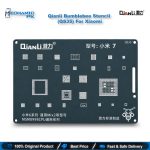
Qianli Bumblebee QS35 BGA Reballing Stencil for Xiaomi
₨ 799
Qianli QS35 Stencil for Xiaomi MSM8998
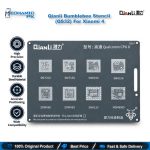
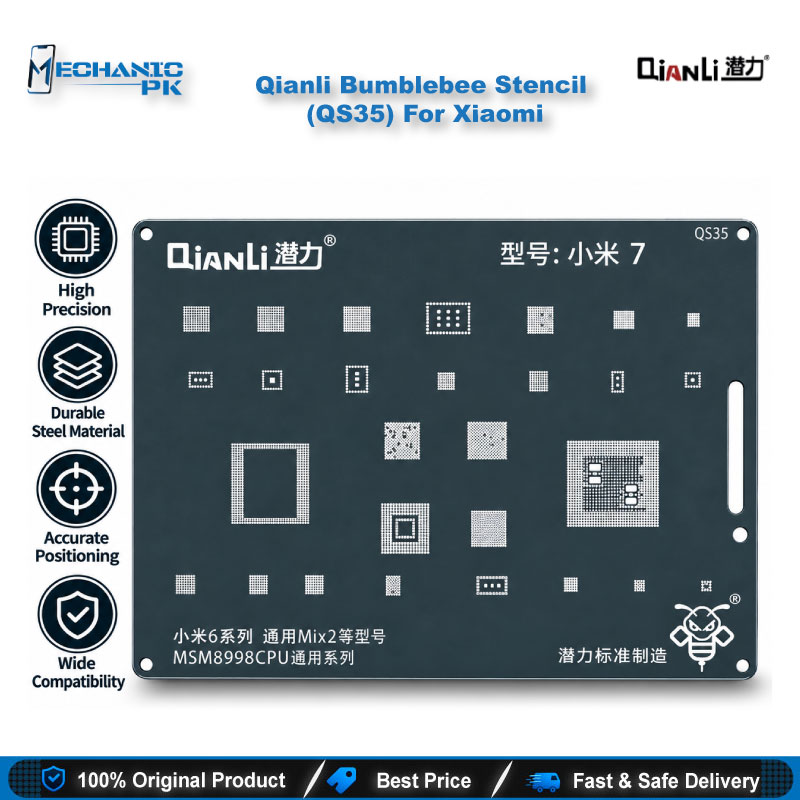
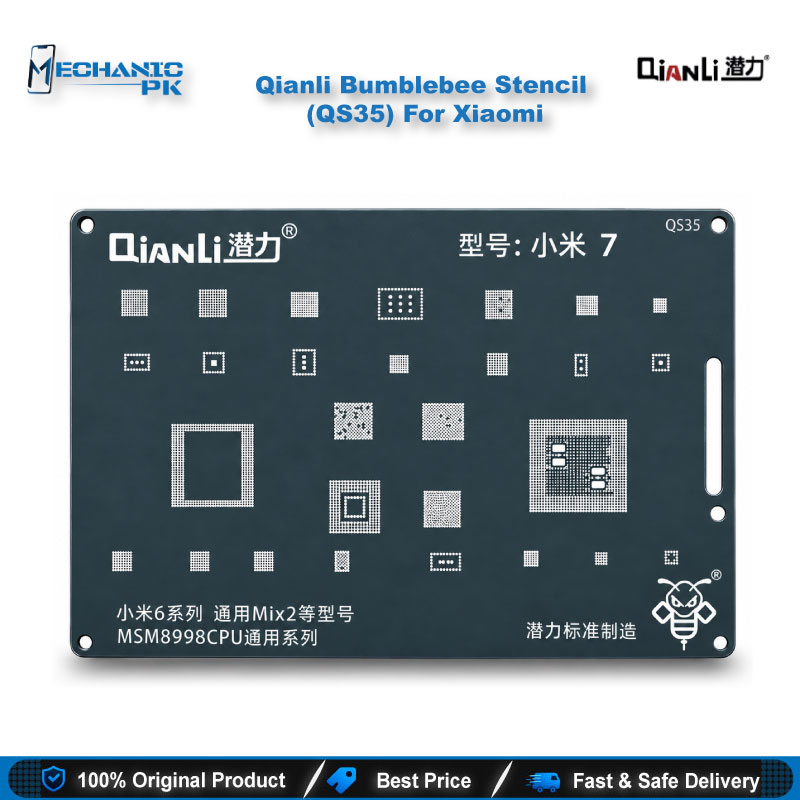
The Qianli Bumblebee QS35 BGA reballing stencil covers the Xiaomi Mi 6 series, the Mix 2 model and other boards on the Qualcomm MSM8998 CPU universal series. Square holes with rounded angles let paste or balls seat cleanly, so you rebuild the CPU footprint after removal without improvising the pitch. Technicians in Pakistan reach for it on dead phone and hang on logo jobs where cracked CPU joints cause the hardware fault. Pair it with a hot air station and a microscope, and every MSM8998 board that lands on your bench gets the same repeatable reballing step.
In stock
QS35 BGA Reballing Stencil for Xiaomi MSM8998 Boards
The QS35 BGA reballing stencil from Qianli’s Bumblebee range does one job: it rebuilds the solder ball array on Xiaomi boards that run the Qualcomm MSM8998 CPU. Qianli lists it for the Xiaomi Mi 6 series and the Mix 2 model inside its MSM8998 universal series, so one stencil serves every board that shares that CPU footprint. If your bench handles Xiaomi flagship boards from the Snapdragon 835 generation, this stencil takes the guesswork out of CPU reballing. Mechanicpk supplies it to technicians who already know that a clean ball array decides whether a reflowed CPU survives or fails again.
How the Square-Hole, Round-Angle Design Works
Qianli builds the Bumblebee stencils with square holes and rounded angles. That geometry matters at BGA pitch, where every pad sits close to its neighbour. Rounded corners help the paste release cleanly from each aperture, and the square opening deposits a consistent volume on every pad. You lift the stencil away and the deposit stays on the pad instead of smearing across the next one. Align the plate over the cleaned CPU pads, hold it flat against the board, print your paste or seat your balls, and move straight to reflow.
Stencil work rewards a steady hand and a clean surface. Remove old solder and flux residue from the pads first, because residue lifts the plate and ruins the print. Keep the stencil flat, press down evenly, and clean it after each use so dried paste does not clog the apertures. A stencil that stays clean gives you the same deposit on the tenth board as on the first.
Where It Fits in Your CPU Repair Workflow
A dead phone with a Mi 6 or Mix 2 board often traces back to weak CPU solder joints rather than a failed chip. You confirm the hardware fault with a multimeter, lift the CPU with a hot air station, clean the pads with your soldering station and flux, and then reball. The sequence stays the one you already run every day: heat, lift, clean, print, reflow. This stencil owns the print step. A microscope lets you inspect pad condition before and after, and a PCB holder keeps the board still while you align the plate. Boot loop issue and hang on logo cases tied to bad CPU joints belong in this workflow, and so do boards that stay dead after flash when the software side checks out clean.
The same logic applies to training benches and service centers. Institutes that teach CPU-level repair can hand students one stencil per CPU family and keep every exercise consistent, while a service center with steady Xiaomi volume can standardize the reball step across every technician on the floor.
Why a Model-Specific Stencil Saves Bench Time
A generic stencil forces you to measure, trim or tape. A dedicated stencil like QS35 matches the MSM8998 footprint, so you spend your time on heat profile and alignment instead. Shops that run IC change karna jobs every day gain the most, because each reball follows identical steps and produces a predictable result. Add solder balls, paste and flux from the Reballing Kits category to complete the job, and check the Hot Air Stations, Soldering Stations and Microscopes categories if your bench still lacks one of them. As your Xiaomi volume grows, step up from a basic hand setup to a hot air station with airflow control and a stereo microscope. Check your board’s CPU marking before you order. Qianli ties QS35 to the MSM8998 series, and a Xiaomi board with a different CPU needs its own stencil.
| Weight | 0.1 kg |
|---|
Key Features
- Qianli Bumblebee series stencil, model QS35
- Square holes with rounded angles for clean paste release
- Built for the Xiaomi Mi 6 series and Mix 2 model
- Covers the Qualcomm MSM8998 CPU universal series
- One stencil for the shared CPU footprint instead of one per handset
- Fits the heat, lift, clean, print, reflow CPU workflow
- Works with solder paste or solder balls on a cleaned CPU footprint
- Suited to dead phone and hang on logo CPU repair jobs
Specifications
| Brand | Qianli |
|---|---|
| Model | QS35 |
| Category | BGA Reballing Stencils |
| Compatibility | Xiaomi Mi 6 series, Mix 2 model, Qualcomm MSM8998 CPU universal series |
| Supported Devices | Xiaomi Mi 6 series, Xiaomi Mix 2 |
| Technology | BGA reballing stencil with square holes and rounded angles |
Common Repair Uses
- Reballing the MSM8998 CPU on Xiaomi boards
- CPU reballing after hot air removal
- Rebuilding the ball array on a cleaned CPU footprint
- Replacing a damaged CPU on an MSM8998 Xiaomi board
- Repairing weak CPU solder joints behind a dead phone
- Hardware fault repair on hang on logo and boot loop issue cases tied to CPU joints
- Pad preparation and paste printing before CPU reflow
Compatible Devices
- Verified scope is the Xiaomi Mi 6 series and Mix 2 model, grouped under the Qualcomm MSM8998 CPU universal series
- Xiaomi Mi 6 series
- Xiaomi Mix 2 model
- Qualcomm MSM8998 CPU universal series (Xiaomi boards sharing this CPU footprint)
FAQ
What is the product name?
What is the brand of this product?
What is the model of this product?
What is this product used for?
Which devices are compatible with this product?
Who should use this product?
Which CPU does the QS35 stencil fit?
Can I use the QS35 stencil on other Xiaomi boards such as Redmi Note models?
Related products