














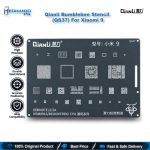
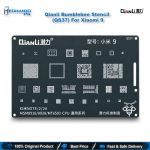
Qianli Bumblebee Stencil (QS37) For Xiaomi 9
₨ 799
Xiaomi 9 BGA Reballing Stencil
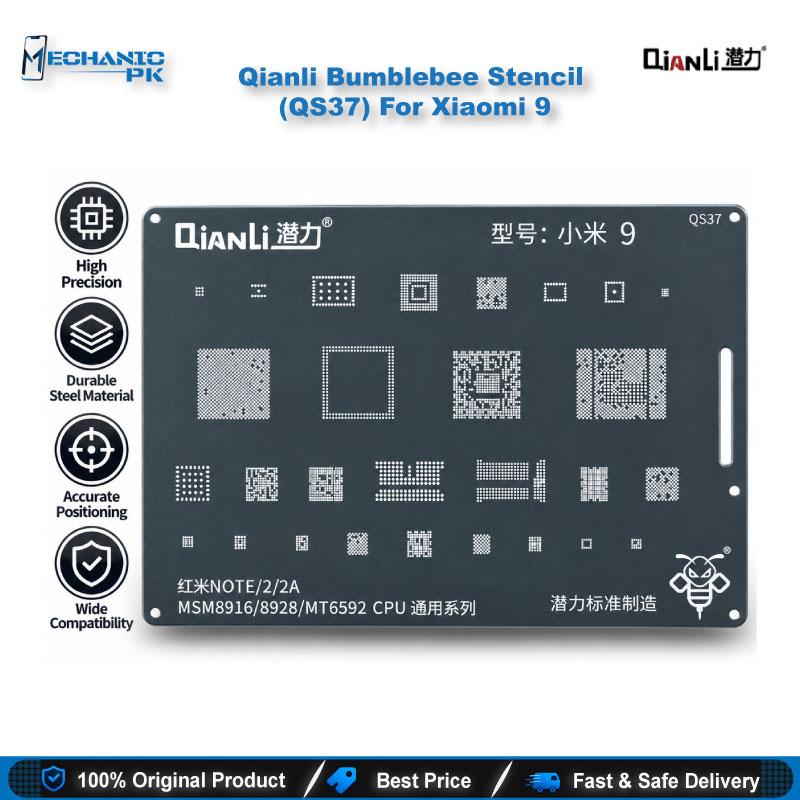
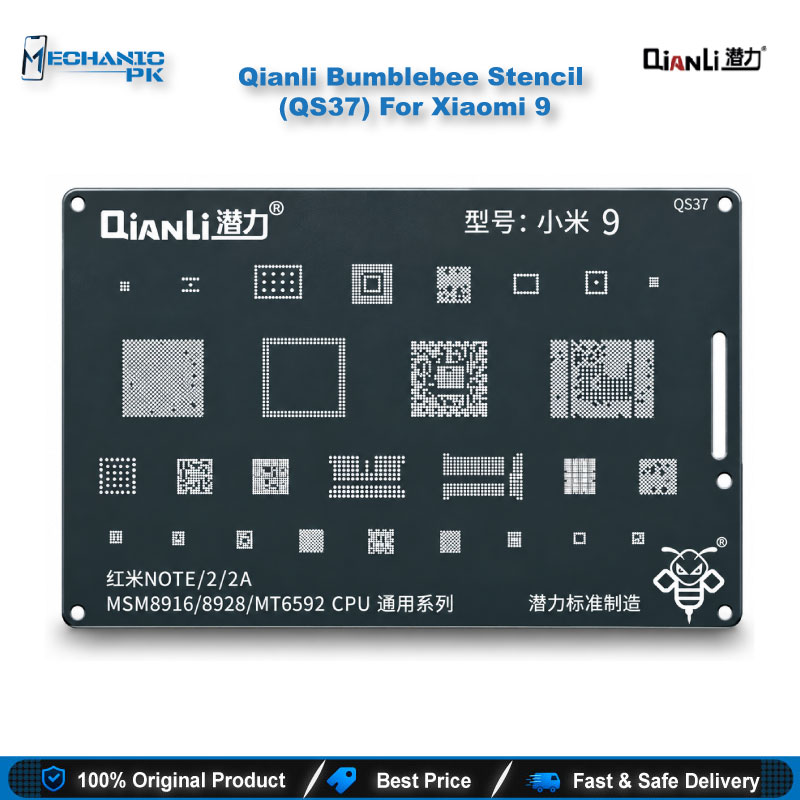
Qianli Bumblebee Stencil (QS37) For Xiaomi 9 gives you a model-specific BGA reballing stencil for board-level work on Xiaomi 9 motherboards. The Bumblebee design uses square holes with rounded angles, so solder paste or balls settle cleanly onto the pads after you lift and clean an IC. Qianli builds it with a new surface treatment and new materials for precise, repeatable use across many jobs. Pair it with your hot air station, flux, and microscope, and your reballing step stays consistent from one dead phone to the next. Mechanicpk supplies the QS37 as a single stencil for Pakistani repair benches.
In stock
Qianli QS37 Stencil for Xiaomi 9 Reballing Work
The Qianli QS37 stencil for Xiaomi 9 is a Bumblebee-series BGA reballing stencil for board-level repair on Xiaomi 9 motherboards. Mechanicpk supplies it to Pakistani repair shops that handle Xiaomi 9 boards and want a model-specific stencil instead of a loose universal plate. After you lift an IC and clean its pads, you need a fast, repeatable way to lay down fresh solder, and a stencil cut for the device removes most of the guesswork. Qianli designed the Bumblebee line around square holes with rounded angles, and the QS37 carries that design into a Xiaomi 9 format. This page explains how the stencil works, where it fits in your workflow, and which tools to pair with it.
How the Bumblebee Square-Hole Design Works
The Bumblebee line uses square holes with rounded angles. That aperture shape gives paste or solder balls a clear path onto each pad and lets you peel the stencil away without dragging the deposit. Qianli also states that the current Bumblebee range ships with a new surface treatment and new materials, which it describes as more precise and easier to use, and it positions the stencils as sturdy and durable over repeated jobs. For a workshop, durability matters as much as accuracy. A stencil that keeps its shape job after job keeps every reball on the same board consistent, which protects your repair margin and your reputation for clean work.
Because the QS37 targets one device, you skip the trial and error of aligning a universal stencil against an unfamiliar footprint. You match the model code to the phone on your bench and start the job.
Where the QS37 Fits in a Xiaomi 9 Repair Workflow
Reballing sits in the middle of a hardware repair, not at the start. A typical Xiaomi 9 job begins with diagnosis: you check the board for shorts with a multimeter under a microscope and confirm the fault is hardware, not software. Dead phone, boot loop, hang on logo, and charging issue complaints can all trace back to a damaged IC or lifted pad, though you rule out flash and software problems first.
Once you confirm the fault, you lift the IC with a hot air station, clean the pads with a soldering station and wick, and secure the board in a PCB holder. Now the stencil enters the process. You apply flux, align the QS37 over the pads, spread paste or place balls, and reflow with controlled heat. You lift the stencil, inspect the new balls under the microscope, and place the IC back on the board. The stencil handles the one step where precision decides whether the repair holds, so a clean, model-matched stencil protects the hours you already spent on diagnosis.
Building Out Your Reballing Bench
A stencil works best as part of a complete setup. Mechanicpk carries reballing kits, hot air stations, soldering stations, microscopes, multimeters, and PCB holders, so you can fill gaps in your bench from one supplier. If your shop also handles flash and storage faults, the same repair queue often calls for eMMC programmers, UFS adapters, ISP pinout tools, and test boxes to verify the phone after the hardware repair.
Start with the QS37 and a reliable reballing kit, then move to higher-end hot air and microscope upgrades as your volume grows. Check the model code QS37 against your Xiaomi 9 board before ordering, and confirm the IC footprint on your board before you apply heat. Mechanicpk lists only the verified Xiaomi 9 scope for this stencil, so you buy knowing exactly which device it targets.
| Weight | 0.1 kg |
|---|
Key Features
- Bumblebee-series BGA reballing stencil from Qianli
- Square holes with rounded angles for clean paste and ball release
- Sturdy, precise build that stays durable over time
- New surface treatment and new materials for easier, more precise use
- Model-specific format for Xiaomi 9
- Reusable across repeated reballing jobs
- Fits a standard workflow of flux, solder balls or paste, and hot air reflow
- Ships as a single stencil
Specifications
| Brand | Qianli |
|---|---|
| Model | QS37 |
| Category | BGA Reballing Stencil |
| Compatibility | Xiaomi 9 |
| Supported Devices | Xiaomi 9 |
| Technology | Square-hole, round-angle BGA stencil design (Bumblebee series) |
| Package Contents | 1x Stencil |
Common Repair Uses
- Real workflows for a Xiaomi 9 BGA reballing stencil.
- Reballing an IC after hot air removal from a Xiaomi 9 board
- Re-tinning pads after cleaning lifted or damaged solder
- Hardware fault repair on dead phone, boot loop, and hang on logo cases once the fault traces to an IC
- Charging issue repair that needs an IC change
- Rework jobs where you place a fresh IC and need consistent solder balls
Compatible Devices
- Verified scope is the Xiaomi 9 model named in the product title. The stencil is model-specific, not universal.
- Xiaomi 9
FAQ
What is the product name?
What is the brand of this product?
What is the model of this product?
What is this product used for?
Which devices are compatible with this product?
Who should use this product?
What hole shape does the Qianli Bumblebee stencil use, and why does it matter?
Can I use the QS37 stencil on a Xiaomi or Redmi model other than the Xiaomi 9?
Related products