


















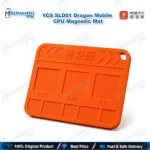
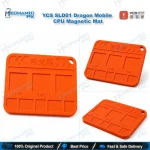
YCS SLD01 Dragon Magnetic Reballing Mat for CPU & NAND
₨ 950
YCS SLD01 Magnetic Reballing Mat
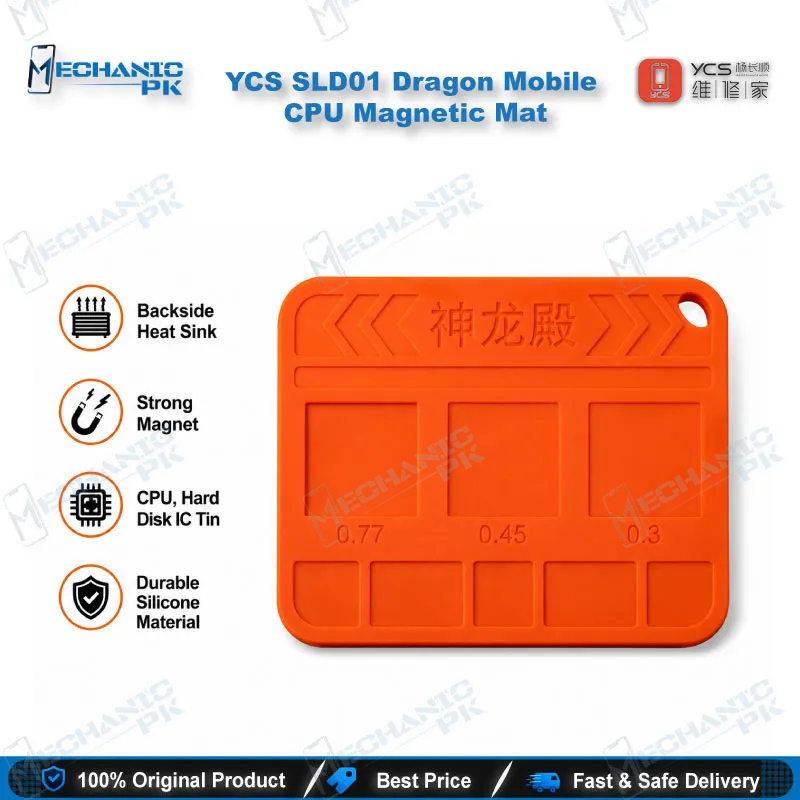
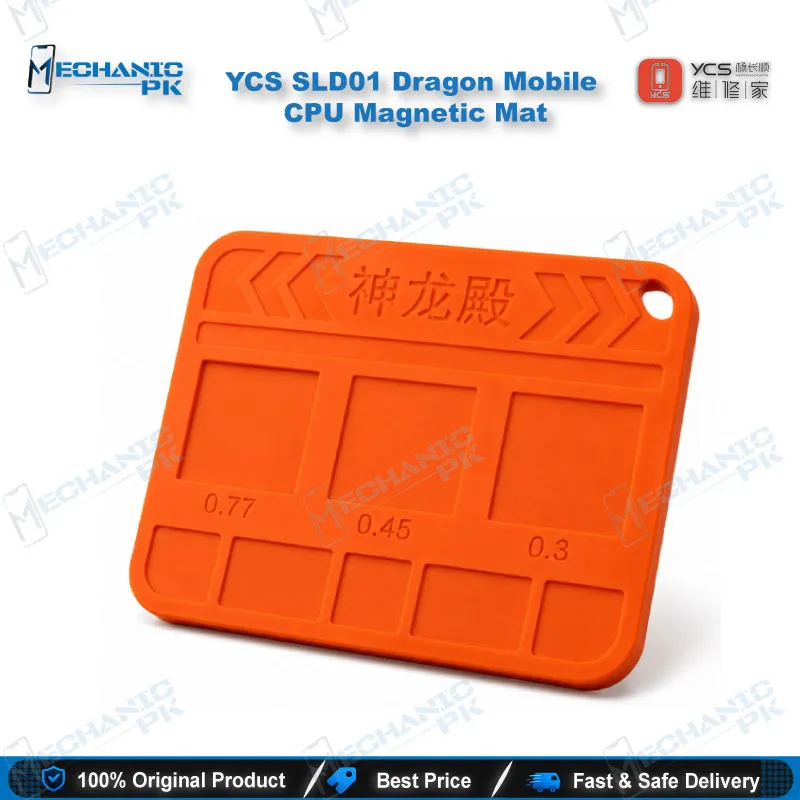
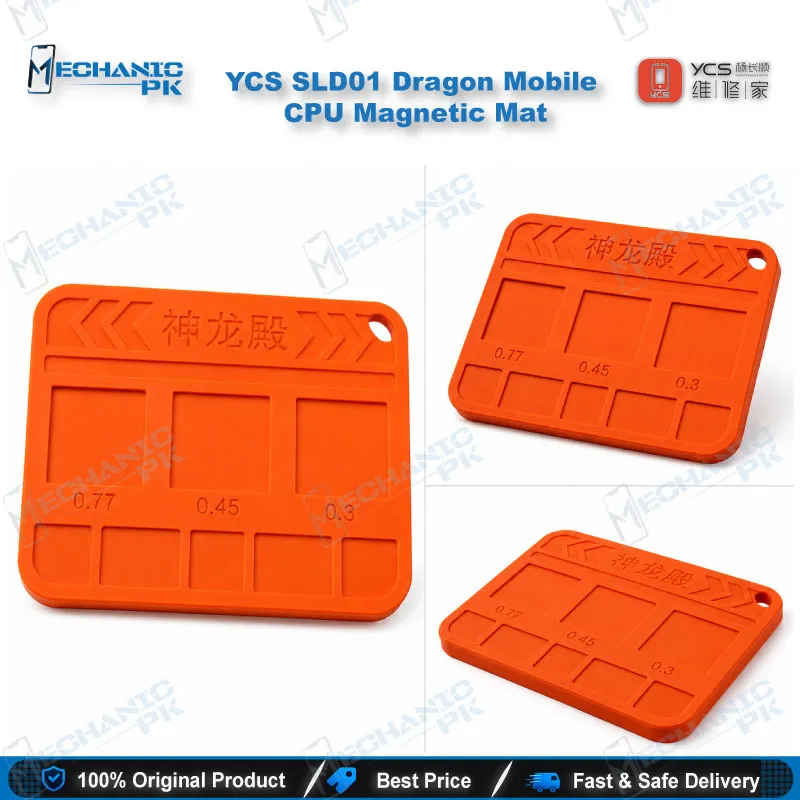
The YCS SLD01 Dragon magnetic reballing mat gives your CPU and NAND tin planting a flat, heat-tolerant base. Three molded chip slots at 0.3 mm, 0.45 mm and 0.77 mm seat chips of different thickness, while the magnetic surface holds your steel mesh stencil in position through the entire reflow pass. Heat dissipation holes on the underside stop the stencil from bulging as it warms. The soft silicone body wipes clean after flux and solder residue. Mechanicpk supplies this mat to repair shops across Pakistan that reball BGA chips on dead phone boards every day. The pack contains one silicone mat; the stencil is not included.
In stock
YCS SLD01 Magnetic Reballing Mat: A Stable Base for BGA Tin Planting
The YCS SLD01 magnetic reballing mat, which technicians also call the Dragon pad, solves a problem every reballing bench knows: a stencil that shifts or lifts the moment heat reaches it. The mat combines a soft silicone body, three molded chip slots and a magnetic surface that pins a steel mesh stencil over your chip. You place the chip, drop the stencil, and the magnet holds alignment while you work paste or solder balls across a CPU or NAND package. For shops that reball daily, this mat removes one of the most common causes of a failed tinning pass.
Slot Sizes and Magnetic Hold
YCS molds the SLD01 with three slot sizes: 0.3 mm, 0.45 mm and 0.77 mm. Each slot seats a chip of matching thickness flat against the mat, so the stencil sits level over the ball pads instead of rocking on an uneven surface. Check your chip’s thickness first, then choose the slot that fits it. The magnetic layer pulls the steel mesh down onto the chip and keeps it there through the whole tinning pass. That grip protects ball alignment on dense CPU and NAND footprints, where a shift of a fraction of a millimetre means bridged or missing balls. Heat dissipation holes on the underside carry heat away and stop the mesh from bulging while it warms under your hot air station.
Where It Fits in the Reballing Workflow
Once you lift a CPU, eMMC or NAND from a dead phone board, you clean the pads, re-tin the chip and seat it back on the PCB. The SLD01 covers the re-tinning step. Drop the chip into the matching slot, lay your stencil over it and let the magnet lock the mesh. Apply paste or place balls, then reflow with hot air. Pair the mat with a reballing kit for your stencil range, a PCB holder for the board itself, and a microscope to inspect pad and ball quality before reflow. When a hardware fault on a dead phone leads you to IC change karna, a mat that holds the stencil still keeps results consistent from the first chip to the twentieth.
Silicone Build and Bench Handling
The silicone body resists heat, gives chips a non-slip seat and protects your bench surface during rework. Flux, solder residue and glue wipe off with water or a damp cloth, so the mat stays ready for the next chip without a long cleanup. The package contains one silicone mat. A steel mesh stencil does not ship with it, so you select stencils that match your target chip and use the SLD01 as the base underneath. If you are building out a complete chip-level station, Mechanicpk also stocks soldering stations, hot air stations, multimeters and test boxes, plus eMMC programmers and ISP pinout tools for the programming and diagnostic steps that follow reballing. Buyers who want a spec-clear, slot-based tin planting mat for their repair bench in Pakistan will find the SLD01 a direct, practical fit.
| Weight | 0.11 kg |
|---|
Key Features
- Soft silicone body with heat resistance
- Strong magnetic adsorption holds the steel mesh in place
- Three chip slots: 0.3 mm, 0.45 mm and 0.77 mm
- Rear heat dissipation holes keep the stencil from bulging
- Non-slip seat for chips during tinning
- Wipes clean of flux, solder residue and glue
- Universal design for BGA tin planting
- Single mat pack; stencil not included
Specifications
| Brand | YCS |
|---|---|
| Model | SLD01 |
| Category | Repair Pad (Reballing Mat) |
| Compatibility | Universal magnetic BGA steel mesh stencils; chip slots of 0.3 mm, 0.45 mm and 0.77 mm |
| Technology | Magnetic adsorption with rear heat dissipation holes |
| Material | Silicone |
Common Repair Uses
- CPU reballing on dead phone boards
- NAND chip reballing and re-tinning
- eMMC reballing after chip removal
- Holding a steel mesh stencil still during tin planting
- Re-tinning a chip after IC change karna
- Protecting the bench during hot air rework
- Repeat reballing batches in a service center
- Quick cleanup of flux and solder residue between chips
Compatible Devices
- Mobile phone motherboard CPU BGA chips
- NAND flash BGA chips
- eMMC BGA packages
- Other BGA ICs that match a slot thickness
- Chips with 0.3 mm thickness (0.3 mm slot)
- Chips with 0.45 mm thickness (0.45 mm slot)
- Chips with 0.77 mm thickness (0.77 mm slot)
- Magnetic-compatible BGA steel mesh stencils
FAQ
What is the product name?
What is the brand of this product?
What is the model of this product?
What is this product used for?
Which devices are compatible with this product?
Who should use this product?
Which chip thicknesses does the YCS SLD01 slot cover?
Does the YCS SLD01 include a BGA stencil?
Related products