














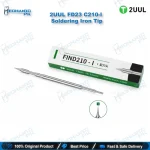
2UUL FD23 C210-I Soldering Iron Tip for Mobile Repair
₨ 700
C210-I Soldering Tip for Mobile Repair
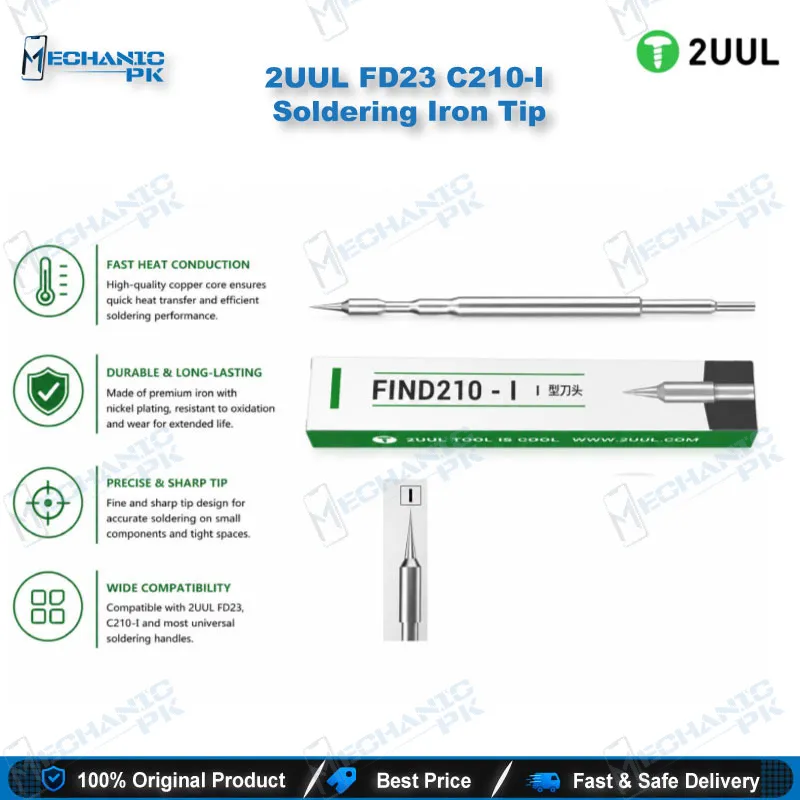
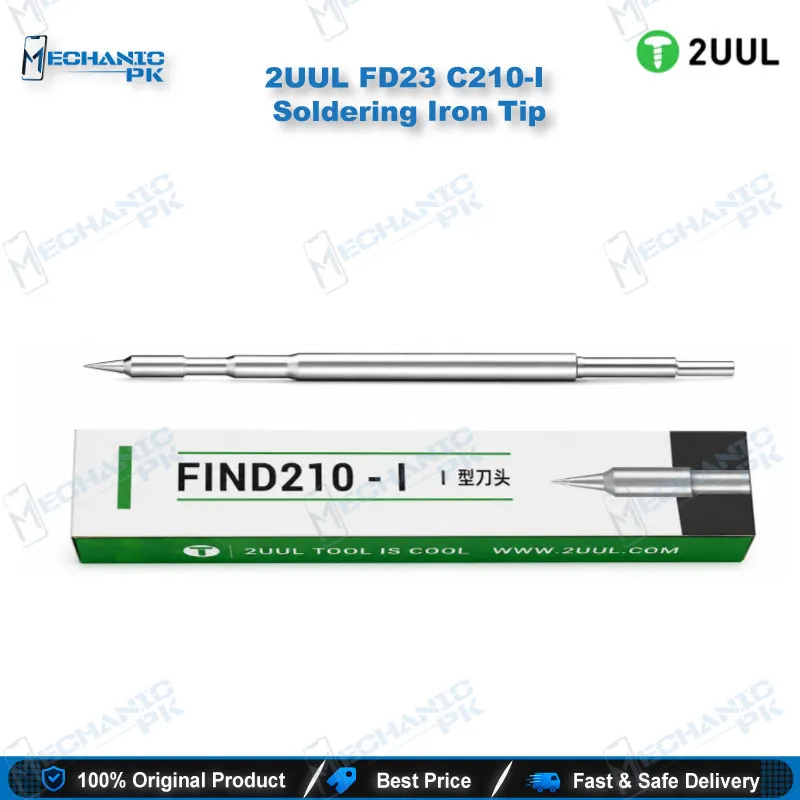
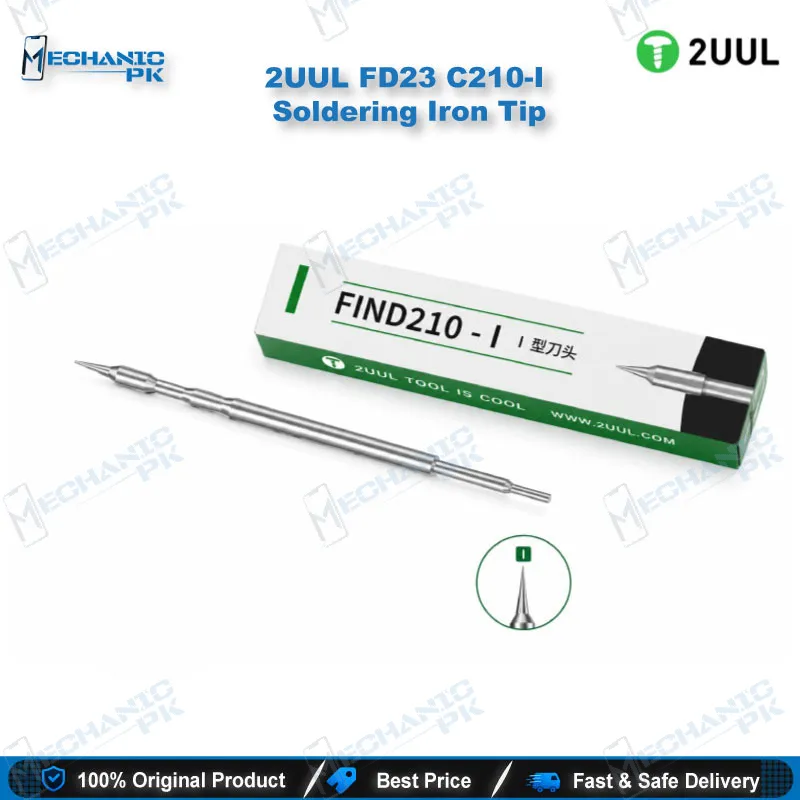
The 2UUL FD23 is a C210-I soldering tip for mobile repair, built for technicians who need a fine conical point on a C210 cartridge station. The integrated cartridge design brings the heater and tip together, so heat reaches the solder joint with less loss. You get precise control on small pads, jumper points, fine-pitch ICs and charging section components. The tip fits C210-compatible stations and T210-type handles, which makes it a direct replacement for worn tips on your repair bench. Keep a few spares in your tool drawer for daily board-level work.
In stock
2UUL FD23 C210-I Soldering Iron Tip for Precision Board Work
The 2UUL FD23 is a C210-I soldering tip for mobile repair, with a fine, needle-style conical profile for work on dense phone motherboards. The C210 cartridge format integrates the heating element and the tip into one unit. Heat travels a short path to the solder joint, and temperature recovery stays quick between joints. If your station runs C210 cartridges, this tip drops in as a replacement without any change to your setup.
Where the I-Type Profile Fits Your Bench
The I-type conical point gives you a small contact area, so you can place heat on one pad without touching its neighbors. This matters on charging ports, small passive components, flex connector pads and fine-pitch ICs, where a wide tip bridges pads or lifts tracks. When you chase a charging issue or a hardware fault on a dead phone, you often need to touch a single test point or lay a jumper wire along a thin trace. A fine tip handles those tasks cleanly, and a microscope keeps the work under control.
Compatibility With C210 Stations and T210 Handles
C210 is a specific cartridge range, and it pairs with T210-type precision handles. The C245 range uses a different handle, so match the tip to your station before you order. Multi-cartridge stations that detect C210, C115 and C245 tips automatically accept this tip as well. Check your station’s tip list first, because that one check prevents wrong-fit returns. Technicians who already run a C210 station can add this tip alongside their K-type and S-type spares.
Care Habits That Extend Tip Life
Tin the tip with a thin coat of fresh solder after every session, because a tinned surface resists oxidation. Wipe the tip on a brass sponge or damp cleaning pad instead of scraping it hard, since aggressive scrubbing strips the plating. Set the station temperature with the job in mind. Lower temperatures protect the tip and the board on small components, while IC change karna on a stubborn joint may call for a higher setting or a hot air station instead. Pair this tip with quality flux and a PCB holder, and your joints come out cleaner on the first pass.
Why Technicians Stock This Tip
A fine tip wears faster than a broad one because technicians use it on every precision job, so a spare in the drawer saves downtime. The 2UUL FD23 gives repair shops a dependable replacement for software-and-hardware benches that handle charging section repair, jumper lagana and small IC work every day. Use it next to your multimeter for continuity checks, then solder the fix on the same board without switching stations. Service centers that run several benches usually standardize on C210 tips so every technician shares the same spares.
| Weight | 0.3 kg |
|---|
Key Features
- Fine conical I-type tip for single-pad precision
- Integrated heater-and-tip cartridge design
- Quick heat transfer to the solder joint
- Direct fit on C210-compatible stations
- Works with T210-type precision handles
- Suits microscope-assisted micro-soldering work
- Iron-plated copper construction
- Suitable as a spare for daily workshop use
Specifications
| Brand | 2UUL |
|---|---|
| Model | FD23 (C210-I) |
| Category | Soldering Iron Tips |
| Compatibility | C210 cartridge soldering stations, T210-type handles |
| Technology | Integrated heater-and-tip cartridge (C210 series) |
| Material | Iron-plated copper |
| Tip Type | Fine conical (I-type) |
Common Repair Uses
- Precision soldering on mobile phone motherboards and small electronics
- Micro-soldering on small SMD components
- Jumper wire soldering on damaged traces
- Charging section repair on small pads and components
- Fine-pitch IC pin touch-up
- Flex connector pad soldering
- Test point and pad cleanup under a microscope
- Small passive component replacement
- General board-level repair on a technician’s bench
Compatible Devices
- C210-series cartridge stations and T210-type precision handles (universal soldering tip, not phone-model specific)
- JBC T210 precision handles
- C210-compatible soldering stations
- Multi-tip stations that auto-detect C210, C115 and C245 tips (such as 2UUL NextTip series)
- Aifen, Aixun and GVM C210-compatible stations
- Yihua C210-compatible stations
- Sugo C210-compatible stations
- Quick C210-compatible stations
- T210-type precision soldering pens
FAQ
What is the product name?
What is the brand of this product?
What is the model of this product?
What is this product used for?
Which devices are compatible with this product?
Who should use this product?
Can I use this C210-I tip on a C245 or C115 handle?
Is the I-type tip good for fine jumper wire and small SMD work?
Related products