
















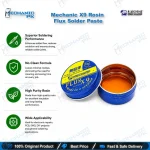
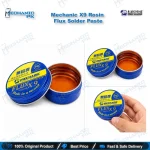
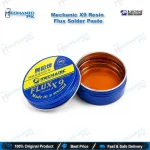
Mechanic X9 Rosin Flux for BGA & PCB Repair
₨ 499
Mechanic X9 Flux for Smartphone and PCB Rework
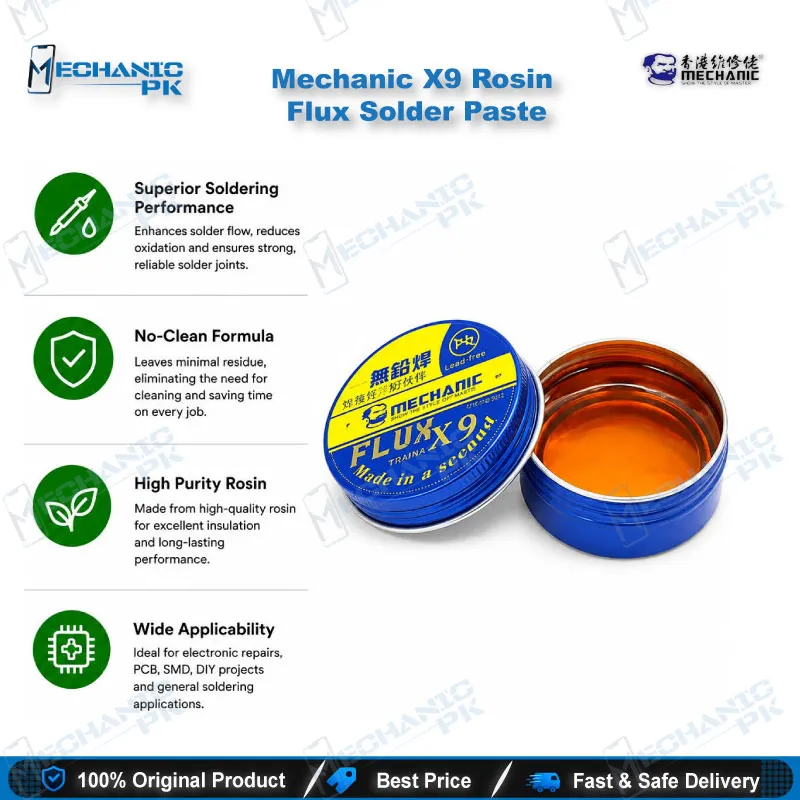
The Mechanic X9 is a rosin-based flux with added chemical components, suited to smartphone mainboards, tablet boards and SMD work. It targets the two problems that slow most rework: oxidized pads and weak solder wetting. The listing describes a transparent residue that needs no washing after soldering, along with a mild pH that stays non-corrosive to ICs and PCBs. Reach for it when you reball a BGA chip, reflow an SMD component or fix a cold joint. For technicians who want reliable solder flow from a single bottle, this flux covers the core rework steps.
In stock
Mechanic X9 Rosin Flux for BGA Repair on Smartphone Mainboards
If you need a rosin flux for BGA repair that handles oxidized pads without creating a cleaning job, the Mechanic X9 fits that role. It works in the same stages as hot air rework, pad preparation and solder wicking on smartphone mainboards. Rosin has anchored electronics soldering for decades, and the X9 adds chemical components to that base to fight oxidation during heating. Tight BGA pitches demand a flux that flows evenly when you lift and reseat a chip. Experienced technicians often judge a flux by how calmly it behaves during a long reflow, not by how it looks in the bottle. Use it as a steady part of your workflow rather than a last-resort fix. The sections below cover the verified specifications and show where this flux belongs on your repair bench.
How the X9 Formula Handles Oxidation and Wetting
Plain rosin performs well on clean copper but loses ground once pads oxidize from age, storage or a previous failed attempt. The X9 adds chemical components to the rosin base, which the distributor says improves oxidation resistance while the board heats. You see the effect as smooth solder flow onto the pad instead of balling up or pulling back. Good wetting matters most on fine BGA balls and small SMD pads, where a weak start often shows up as a cold joint after reflow. Consistent wetting also reduces the number of passes you need with the iron, which protects the pads from lifting. Many shops lose a board to a rushed reflow because the pad never got a real chance to accept solder. This matters on a dead phone board, where one bad joint sends you back to the beginning. Apply the flux first, let it settle on the pad, and then bring in the solder so the bond forms on a clean surface.
Residue, Cleaning and Board Safety
Post-solder cleaning eats time on a busy bench, and the X9 aims to cut that step. The listing calls the residue transparent and states that washing is not needed after soldering. Transparent residue lets you check the joint under magnification without a dark film hiding the solder edge. It also helps when you compare a repaired pad against a known-good reference board. Board safety depends on chemistry, so the documented mild pH and non-corrosive profile matter for long-term copper health around ICs. Keep heating short and controlled so the residue does not bake onto the board. A clean-looking joint still needs a visual check, so treat the residue result as a convenience rather than a guarantee. Inspect each reflowed joint under a microscope and remove residue wherever your process or a customer standard requires it. Close the bottle tightly between sessions so the flux stays workable.
Where the X9 Fits in Your Repair Workflow
Use this flux at the stages where the board gets prepared for new solder. Apply a thin layer to the pads before lifting an IC, then clear the old solder with a wick and reflow the replacement chip with the same flux. Many technicians also reach for flux when they need jumper lagana on traces, because solder bonds more reliably to fluxed bare copper. For micro-soldering on smartphones and tablets, flux helps you control small solder volumes where space leaves little room for error. It also suits general SMD rework when you fix a cold joint on a connector pad or a small power component. Pair the X9 with a steady hot air station, a clean tip and proper preheating for the most consistent results. When a chip refuses to seat cleanly, fresh flux often fixes the problem faster than another round of reheating. Keep the bench tidy between jobs, since flux residue on tools can transfer to the next board. A single bottle covers many jobs, from single-chip replacement to full mainboard rework.
| Weight | 0.1 kg |
|---|
Key Features
- Rosin base enhanced with chemical additives for anti-oxidation performance
- Listed for smartphone, tablet, PCB, SMT and BGA repair
- Improves solder wettability on pads and BGA balls
- Transparent residue that needs no washing after soldering
- Mild pH described as non-corrosive to ICs and PCBs
- Listed melting point slightly higher than standard soldering tin
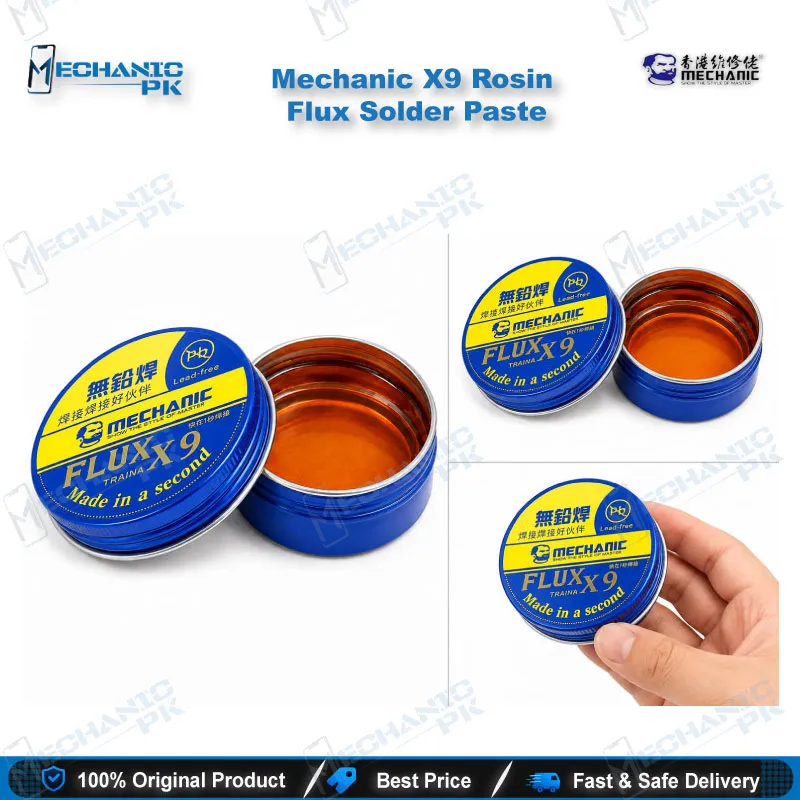
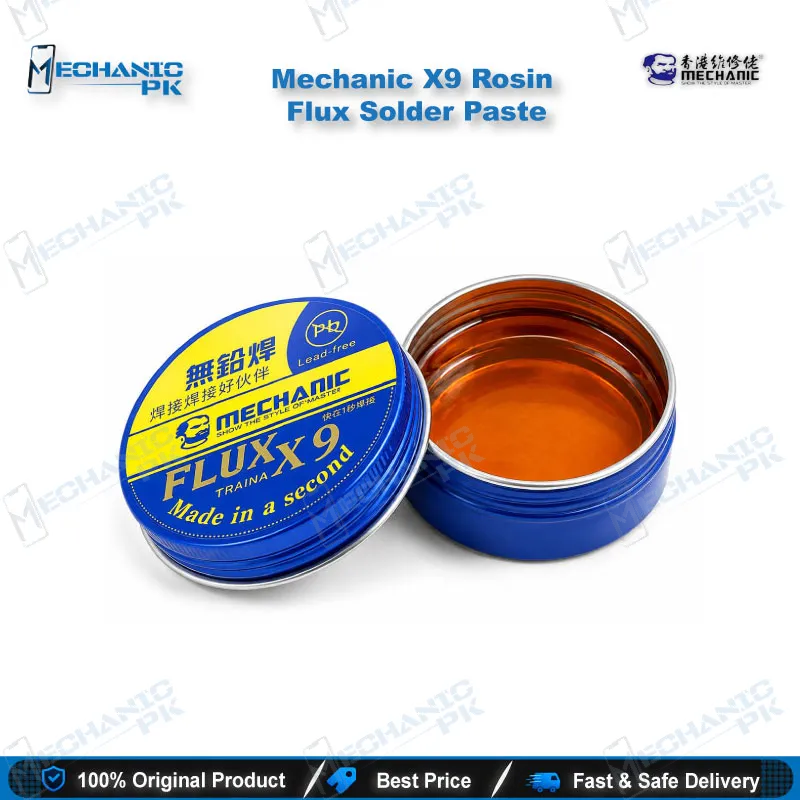
- Packed in a 30 ml bottle
- Suited to micro-soldering and high-density SMD work
Specifications
| Brand | Mechanic |
|---|---|
| Model | Flux X9 |
| Category | Soldering Flux |
| Compatibility | Universal, not device-specific |
| Supported Devices | Smartphone and tablet PCBs (general scope, not model-specific) |
| Technology | Rosin-based flux with chemical additives, for PCB, SMT, BGA repair and micro-soldering |
| Material | Rosin with chemical additives |
Common Repair Uses
- Verified workflows where this flux applies during soldering and rework.
- Pad preparation before BGA chip removal
- Solder wetting during BGA reballing
- Reflowing replacement ICs on smartphone mainboards
- Cold joint repair on SMD components
- Jumper lagana on PCB traces
- Micro-soldering on high-density smartphone boards
- Solder bridge cleanup on fine-pitch pads
- Refinishing connector and charging-port pads on mobile PCBs
Compatible Devices
- Verified scope is general smartphone and tablet PCB work, not model-specific.
- Smartphone mainboards (general, not model-specific)
- Tablet mainboards (general, not model-specific)
- BGA packages during chip removal and reballing
- SMT and SMD components on PCB assemblies
- Micro-soldering pads on high-density boards
- Connector pads on mobile PCBs
- Small surface-mount ICs and passive components on repair boards
- Universal PCB and electronic repair work (not device-specific)
FAQ
What is the product name?
What is the brand of this product?
What is the model of this product?
What is this product used for?
Which devices are compatible with this product?
Who should use this product?
Does this flux need cleaning after soldering?
Is this flux safe for ICs and PCBs?
Related products