














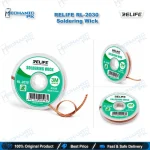
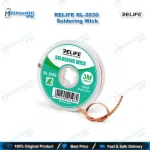
RELIFE RL-2030 Desoldering Wick for Mobile Repair
₨ 1
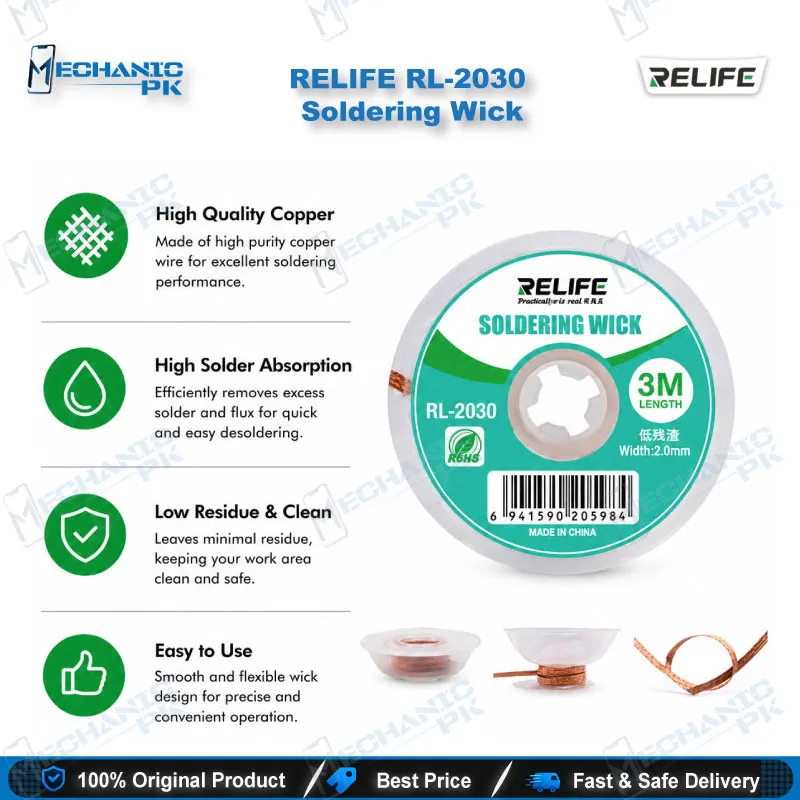
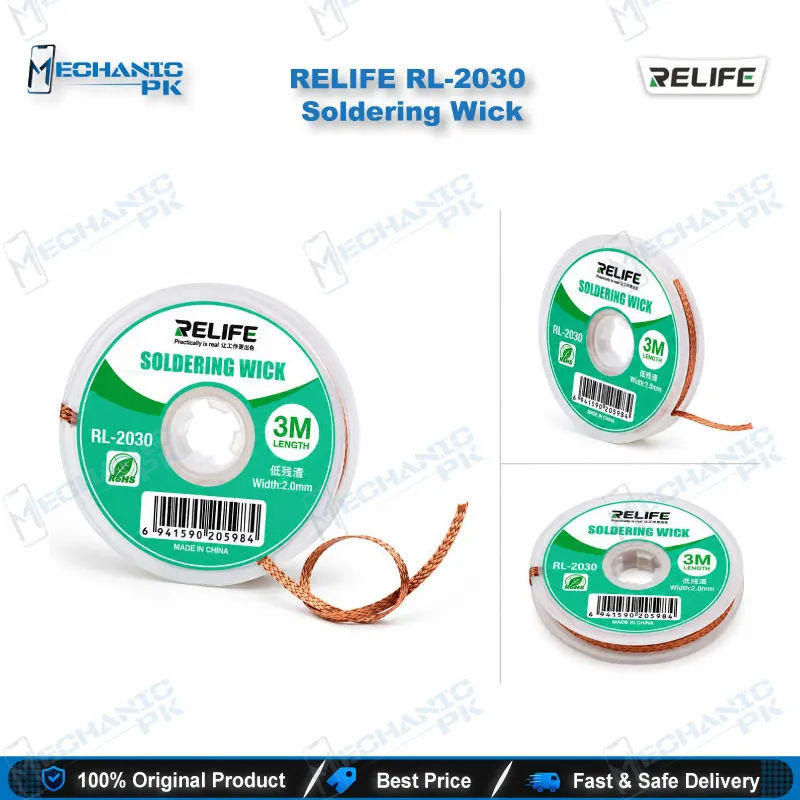
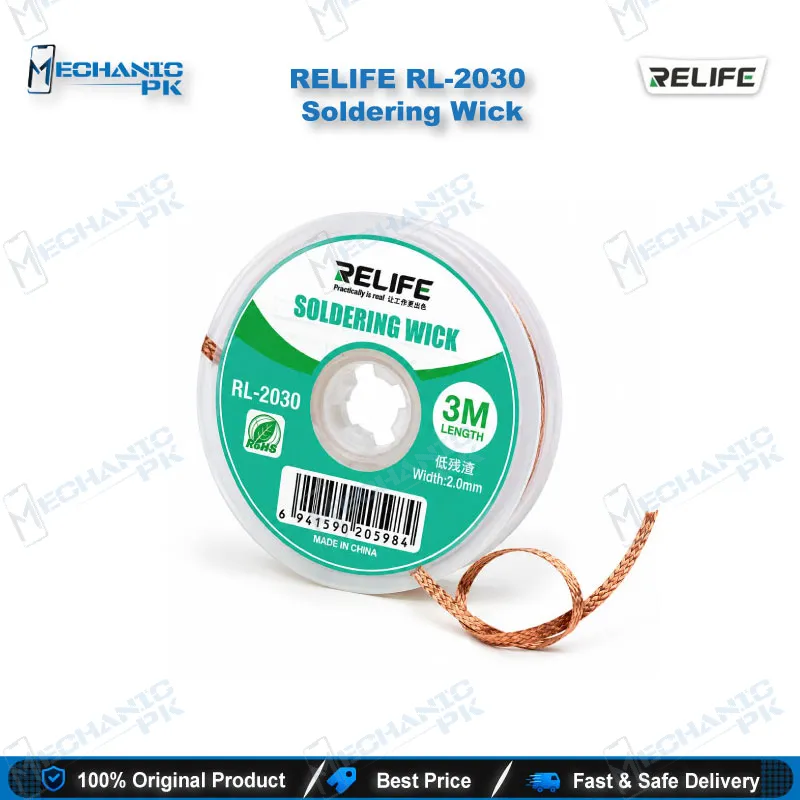
RELIFE Desoldering Wick for Precise Solder Removal
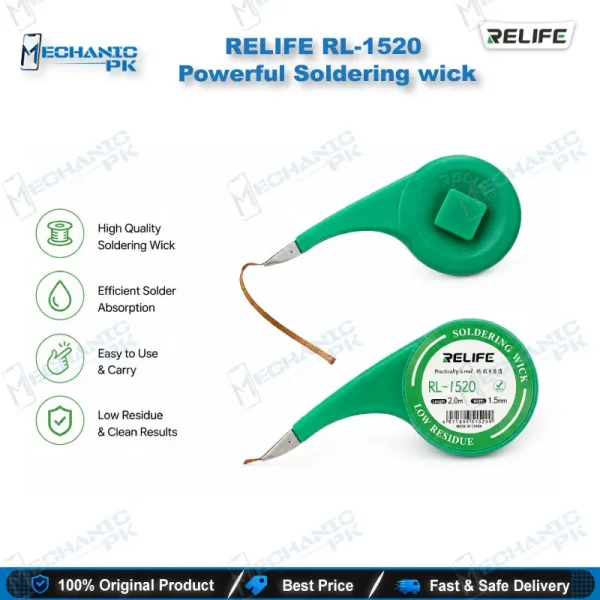
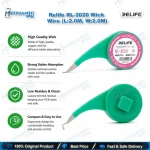
Clearing a bridged pin or lifting excess solder from a phone motherboard needs a wick that responds fast and leaves the pad intact. This RELIFE desoldering wick uses a fine copper braid that draws molten solder into its weave through capillary action. Your iron heats the braid, the solder flows up, and the pad stays clean for the next step. It suits IC pads, charging connectors, and flex cable contacts on mobile boards, where a controlled pass matters more than brute heat.
Out of stock
RELIFE RL-2030 Desoldering Wick for Mobile Repair in Pakistan
Desoldering wick, also called solder wick or desoldering braid, is the consumable that pulls excess solder off a pad without forcing the joint apart. On a phone motherboard, that matters every time a pin is bridged, a charging connector is lifted, or a component needs to come off a dense board. A good wick works through capillary action: the fine copper braid draws molten solder into its channels as the iron heats it. The RELIFE desoldering wick is built for this job. Your repair bench gets a braid that clears solder quickly, so you spend less time heating the pad and carry less risk of lifting it.
How the Copper Braid Pulls Solder
The wick’s performance comes from its braid. Fine copper strands are woven tightly, which creates many small channels for molten solder to enter. When you place the wick over a joint and press the iron tip onto it, heat transfers into the braid and the solder rises into the weave. Copper conducts heat well, so the braid reaches working temperature quickly and the solder moves in seconds instead of dragging across the pad. Oxidation resistance matters here as well. A braid that tarnishes absorbs less solder with every pass, so a clean, bright copper finish keeps the pull consistent from the start of the reel to the end. You feel the difference on a crowded board, where a weak wick leaves behind the small solder blobs that cause shorts.
Low-Residue Finish for Clean Boards
After desoldering, the board should be clean enough to inspect and rework without an extra wash. This wick uses a no-clean flux formulation with a halide-free, non-conductive residue, so leftover flux usually does not need removal from most boards. Less residue means fewer cleaning steps at your bench and a lower chance of leakage paths under fine-pitch parts. Heavy contamination and old, oxidized pads still need proper cleaning before final testing, so check each board before you power it up. A clean pad after one pass saves time when you move on to reballing, reflow, or replacing a component.
Step-by-Step Use on Mobile Boards
Start by placing the wick flat over the solder you want to remove. Press the heated tip of your iron onto the wick rather than onto the pad alone, so heat reaches the braid and the solder together. Once the solder has wicked up, lift the wick away immediately to avoid overheating the pad. Cut off the used section of braid before the next pass, because a saturated section cannot absorb more solder. Use short passes instead of one long heat cycle, and let the pad cool between attempts on delicate ICs. This method protects phone IC pads, charging connectors, and flex cable contacts, and it keeps your repair moving without rework on lifted copper.
| Weight | 0.9 kg |
|---|
Key Features
- Fine copper braid for fast capillary solder absorption
- Rapid heat conduction for quick solder removal
- No-clean, halide-free flux with low residue
- Oxidation-resistant copper finish for consistent pull
- Suitable for phone motherboards and general PCB work
- Reduces thermal stress on nearby components
- Cut off used sections for repeated clean passes
- Clean pad finish for inspection and rework
Specifications
| Brand | RELIFE |
|---|---|
| Category | Desoldering Wick |
| Material | 100% Copper |
| Technology | No-Clean, Halide-Free Flux |
Common Repair Uses
- Removing excess solder from bridged IC pins
- Clearing solder from charging connector pads before replacement
- Pulling solder off a component so it lifts cleanly from the board
- Cleaning pads prior to reballing or reflow work
- Correcting solder mistakes on small PCB components
- Removing solder from flex cable contacts without lifting them
- Preparing a pad for a new component after a failed joint
- Clearing solder blobs left behind after a jumper repair
Compatible Devices
- Universal, not device-specific. Suitable for any board-level desoldering where pad or joint access is needed.
- Mobile phone motherboards (through-hole and SMD pads)
- Phone IC and BGA pad cleanup
- Charging connectors and board-level connector pads
- Flex cable (FPC) contacts
- Power supply and general PCB components
- Pads prepared for reballing or component replacement
- Small-pitch SMD components
- Board-level solder bridge correction
FAQ
What is the product name?
What is the brand of this product?
What is the model of this product?
What is this product used for?
Which devices are compatible with this product?
Who should use this product?
How do I use a desoldering wick correctly?
Does this wick leave residue that needs cleaning?
Related products