














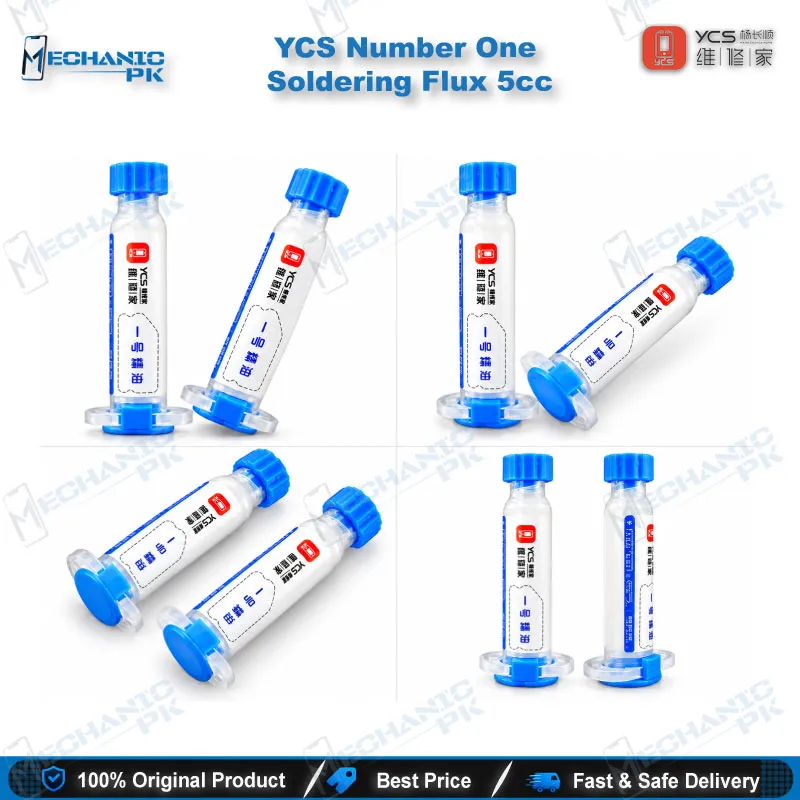
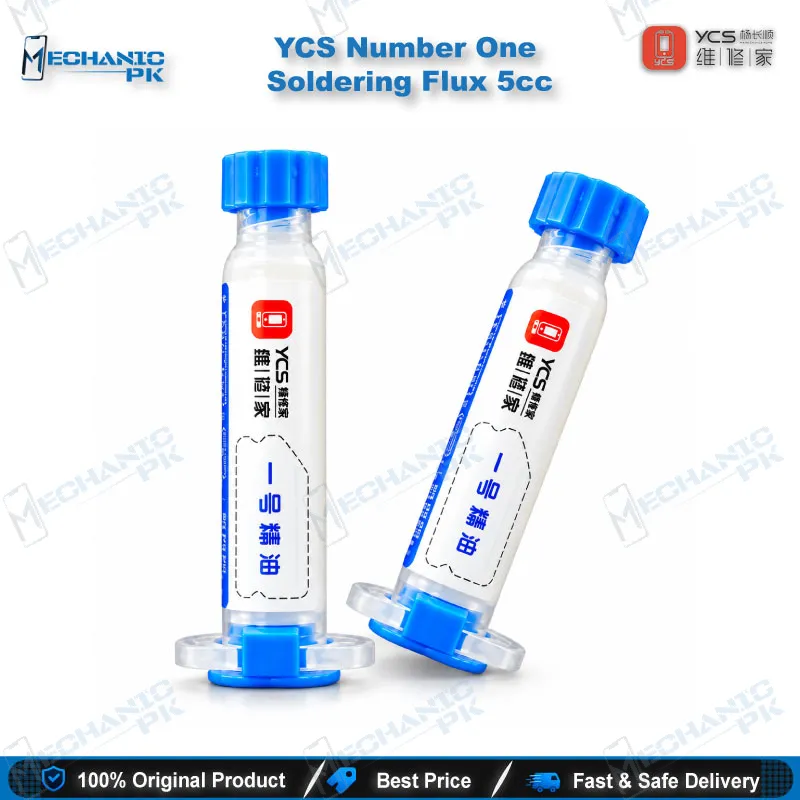
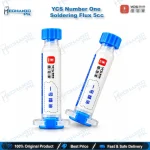
YCS No.1 No-Clean Soldering Flux 5cc for Mobile Repair
₨ 400
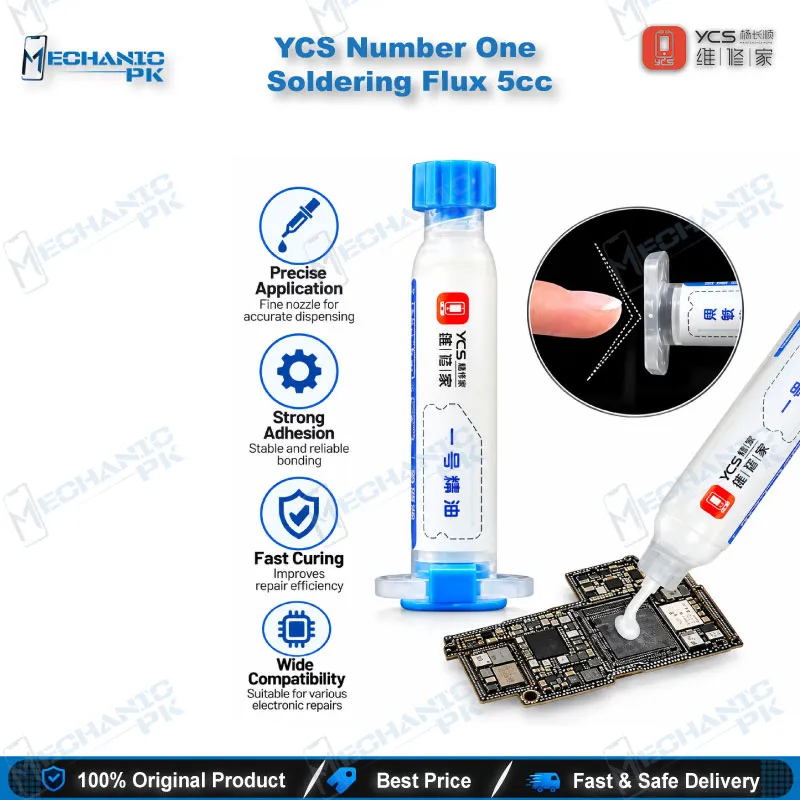
YCS No.1 No-Clean Flux, 5cc
YCS No.1 is a no-clean soldering flux for mobile repair, built on a synthetic rosin base that is halogen-free and lead-free. It strips oxides from pads and component leads, protects the metal against re-oxidation while you heat the joint, and drives solder to wet cleanly. The residue stays non-conductive, which keeps fine-pitch areas safe from leakage and short circuits. The 5cc pack covers PCB repair, BGA reballing, SMD soldering, and logic board work on phones and tablets. Mechanicpk supplies it to technicians and repair shops across Pakistan who need consistent fluxing at the bench.
In stock
YCS No.1 Flux: Chemistry and Bench Behavior
The YCS No.1 is a no-clean soldering flux for mobile repair, packed in 5cc for technicians who work at board level every day. It targets the point where most rework fails: oxidised pads and balls that refuse to wet. You apply it, bring the joint to temperature, and the flux clears the oxide layer so solder flows into a bright, even fillet. Mechanicpk lists it for workshops that treat IC change karna, reballing, and SMD replacement as routine jobs, where a dependable flux matters as much as the hot air station in your hand.
Composition and Residue Behavior
YCS builds No.1 on a synthetic rosin base, and the formulation is halogen-free and lead-free. The residue it leaves after soldering is non-conductive, so a thin film near fine-pitch pads does not open leakage paths or short out a charging or power section. The no-clean classification means minimal residue stays behind without a mandatory wash. Many technicians still wipe the area before final inspection under a microscope, because clean pads show bridges and cracked joints faster. That choice stays with you and your inspection routine.
Oxide Removal, Wetting, and Heat Tolerance
The flux handles three jobs in one pass. It removes oxides from metal surfaces, lays a protective layer that slows re-oxidation while the joint heats, and promotes solder flow and wetting across the pad. It also tolerates high soldering temperatures without burning or breaking down, so you can work with a hot air station or soldering station at the temperatures a multilayer board demands. Consistent wetting reduces the cold joints and solder balls that send a repaired board back to your bench as a hardware fault.
Where It Fits in Your Repair Workflow
Place this flux at the start of any soldering step. On a dead phone with a suspected power IC fault, you flux the pads before you seat the new part. During BGA reballing, you flux the cleaned pads so fresh balls settle and reflow evenly. For SMD component replacement, a small amount on the pad helps the part self-align as solder melts. The listed applications also cover general PCB repair and maintenance and logic board work on phones and tablets, which includes charging issue, display problem, and network issue repairs that end at a solder joint.
Pair it with the right supporting gear. Reballing kits and PCB holders keep the board steady while you work. Hot air stations and soldering stations supply controlled heat. A microscope lets you check every joint, and a multimeter confirms continuity and shorts after the repair. If your shop outgrows a 5cc pack, the natural upgrade path runs toward higher-capacity heat sources and a fuller rework setup from the same soldering category.
Why Technicians Choose It for Daily Rework
A 5cc pack suits a technician who needs fresh flux within reach without stocking bulk quantities. You get a known formulation, a clear residue profile, and a flux that matches the three tasks you repeat most: reballing, SMD work, and IC-level repair. Repair shops and service centers in Pakistan can standardise on one flux across benches, which keeps results comparable between technicians and cuts the trial-and-error that costs time on a busy day.
| Weight | 0.15 kg |
|---|
Key Features
- No-clean formulation with minimal, non-conductive residue
- Synthetic rosin base
- Halogen-free composition
- Lead-free composition
- Removes oxides from metal surfaces
- Forms a protective layer against re-oxidation
- Promotes solder flow and wetting
- Tolerates high soldering temperatures without burning or degrading
Specifications
| Brand | YCS |
|---|---|
| Model | No.1 (Number One), 5cc |
| Category | Soldering Flux |
| Compatibility | Mobile phone and tablet logic boards, PCB, BGA, and SMD soldering work |
| Supported Devices | Mobile phone and tablet logic boards |
| Technology | No-clean synthetic rosin flux, halogen-free, lead-free, non-conductive residue |
Common Repair Uses
- Fluxing before and during solder reflow on mobile phone and tablet boards.
- BGA reballing and rework
- IC change karna on dead phone boards
- SMD component soldering
- Charging issue repair at board level
- Display problem repair at board level
- Network issue repair at board level
- Pad cleaning and tinning before component placement
- General PCB repair and maintenance
Compatible Devices
- Universal, not device-specific. It works on the solder joints of mobile phone and tablet logic boards across brands.
- Mobile phone logic boards (all brands)
- Tablet logic boards
- BGA ICs on phone motherboards
- SMD components on phone PCBs
- Power and charging section ICs
- Display and touch section components
- Network and baseband section parts
- General PCB repair and maintenance work
FAQ
What is the product name?
What is the brand of this product?
What is the model of this product?
What is this product used for?
Which devices are compatible with this product?
Who should use this product?
Does YCS No.1 flux need cleaning after soldering?
Can I use YCS No.1 flux for BGA reballing and SMD work?
Related products