














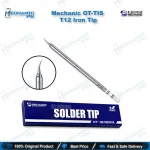
Mechanic T12 Soldering Iron Tip for Mobile Repair
₨ 1
T12 Soldering Iron Tip for Precise Mobile Repair
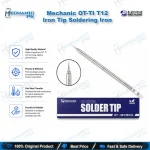
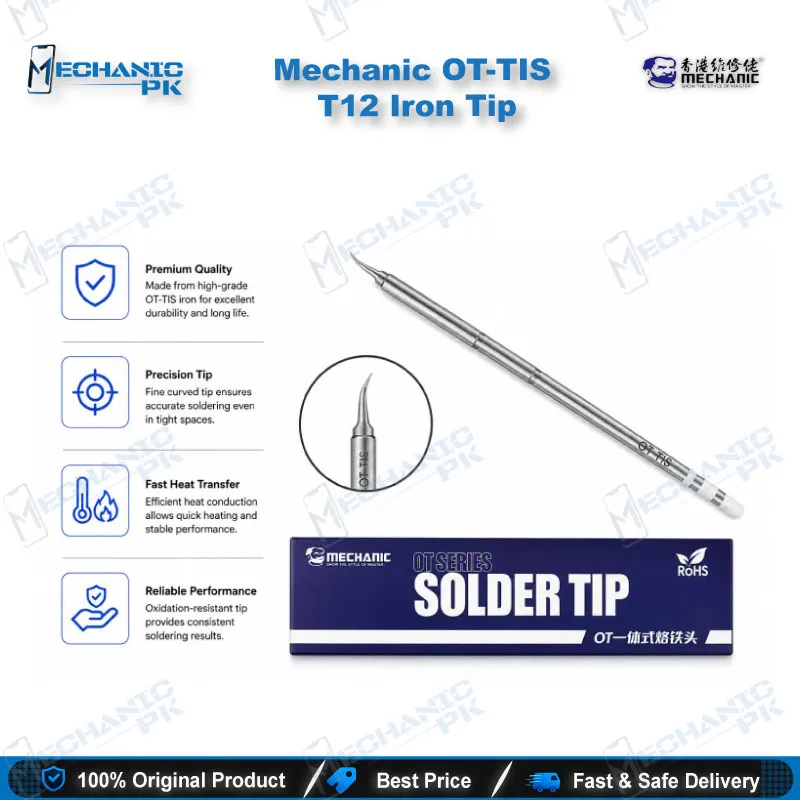
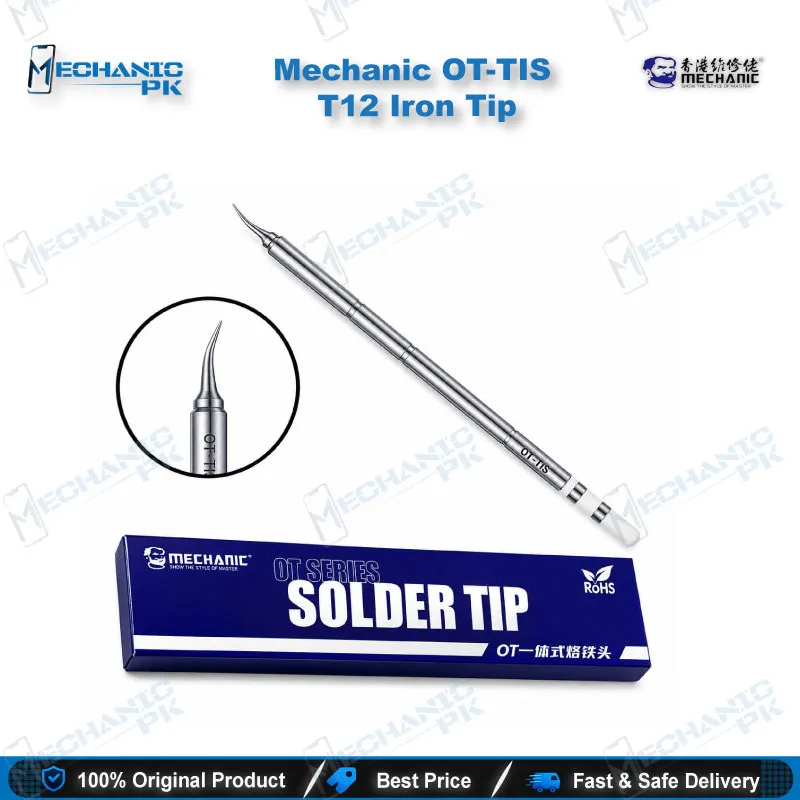
This Mechanic T12 tip combines the heating core, temperature sensor, and tip into one replaceable cartridge. Fit it to a T12-compatible station and the sensor reads heat at the working end, so temperature holds steady during fine joint work. Technicians use T12 tips for charging port rework, IC pin reflow, and jumper work on compact phone boards. Match the shape to your smallest pad, because a fine point suits pin-level work while a broader chisel moves heat into larger pads. Your repair bench gets a replaceable part that restores tip performance without replacing the whole handle.
Out of stock
T12 Soldering Iron Tip for Mobile Repair in Pakistan
A T12 soldering iron tip for mobile repair is the working end of your station, and it decides how cleanly you lift components, reflow joints, and clear solder bridges. This Mechanic tip follows the T12 cartridge design, where the heating core, temperature sensor, and tip form one replaceable unit. That structure lets your station regulate heat close to the joint instead of at the handle, which matters on dense phone boards. Mobile repair technicians across Pakistan use this form factor on motherboards, charging circuits, and display connectors every day. Whether you run a small service counter or a full repair shop, the right tip keeps your output consistent. Your repair bench gets the most value when the tip matches the job, with fine shapes for pin-level work and broader shapes for ground planes and shields. The sections below cover where the tip fits in your workflow, how to choose a shape, and how to keep the tip working longer between replacements.
Where This Tip Fits in Your Repair Workflow
Most phone repairs follow a sequence of diagnosis, component removal, rework, and testing, and the T12 tip handles the hands-on stages in the middle. During charging port replacement, you use it to lift the old connector and reflow the new pins without disturbing neighboring parts. Jumper work also depends on controlled heat, because you bridge small pads with a measured amount of solder rather than flooding the joint. Board-level fault tracing benefits from a stable tip temperature, since you can heat a suspect component briefly and observe the result. A quick check of the joint after each stage catches problems early and saves rework time. Keep a spare tip on your bench so you can switch shapes in seconds and avoid stopping a job midway. Over time, a well-matched tip makes each stage feel predictable and repeatable.
Choosing the Right Tip Shape
T12 tips come in letter and number shapes, and the shape controls how much contact area reaches the joint. Chisel shapes such as K and B spread contact across larger pads and suit general reflow and ground connections. Needle and bent shapes such as I and J reach tight spaces between components, under shields, and along narrow connector rows. Choose the shape that fits your smallest pad rather than your largest, because a broad tip transfers heat into neighboring parts and risks lifting them. Sample tips on scrap boards before working on a customer’s device, so you feel the heat response first. Some specialty shapes carry longer codes, so read the shape marking before you place an order. Writing down the shape you use for each job helps your team reorder the right part without guesswork.
Compatibility and Care for Longer Tip Life
This tip fits T12-compatible soldering stations, including the T12 Pro family and other stations that accept the T12 cartridge format. Confirm that your handle uses the T12 cartridge before you fit it, because tip systems from other families may not seat properly. Keep the operating temperature moderate, since suppliers of T12 tips advise staying below 400°C to protect the anti-oxidation plating. Avoid prying with the tip, because fine bent shapes can snap or warp under force. After each session, tin the working surface and wipe it on a brass or sponge pad to remove residue. Regular tinning shields the copper beneath from oxidation and keeps heat transfer consistent from the first joint to the last. Store spare tips in a dedicated holder so the working surfaces stay clean and protected between jobs.
| Weight | 0.9 kg |
|---|
Key Features
- Cartridge design combines heating core, sensor, and tip
- Compatible with T12-standard soldering stations
- Shape options for chisel, needle, and bent work
- Suits both pad-level and pin-level repair tasks
- Replaceable tip restores heat contact without replacing the handle
- Quick shape changes during a repair session
- Supports a tinning and cleaning routine for longer life
- Fits a standard repair bench workflow
Specifications
| Brand | Mechanic |
|---|---|
| Category | Soldering Iron Tips (T12 Series) |
| Compatibility | T12-compatible soldering stations |
| Technology | T12 cartridge with integrated heating core, temperature sensor, and tip |
Common Repair Uses
- Reflowing charging port connector pins
- Lifting and replacing small ICs on phone boards
- Jumper work between pads on mobile motherboards
- Removing shields and clearing solder bridges
- Replacing display flex connector pins
- Soldering battery connector pads
- Repairing pins on camera module connectors
- Board-level fault tracing with controlled heating
Compatible Devices
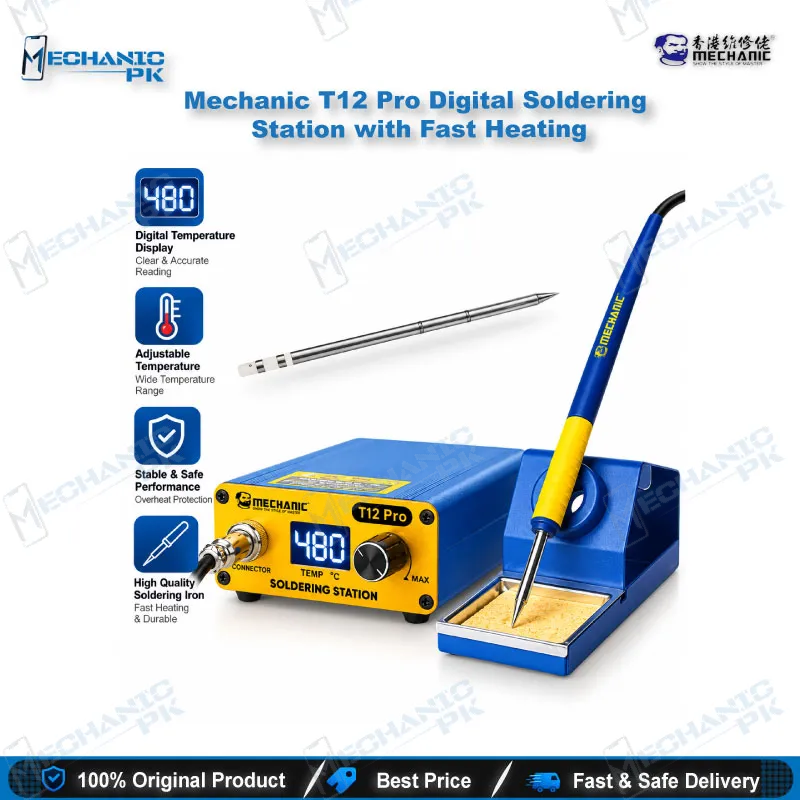
- Mechanic T12 Pro soldering station
- FX-951 T12 soldering station
- FX-950 T12 soldering station
- FX-942 T12 welding bench
- Other T12 cartridge stations with a matching handle
- Chisel shapes K and B for pad-level work
- Needle and bent shapes I and J for pin-level work
- Bent-needle shape JL02 for micro-hook work
FAQ
What is the product name?
What is the brand of this product?
What is the model of this product?
What is this product used for?
Which devices are compatible with this product?
Who should use this product?
Which T12 stations accept this tip?
Which tip shape suits phone IC pins?
Related products