















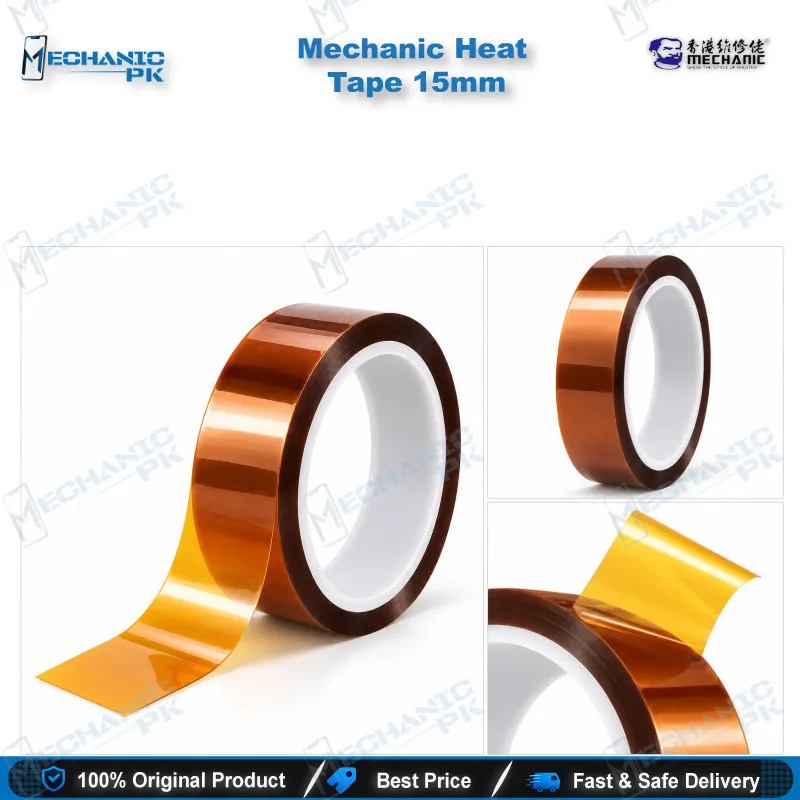
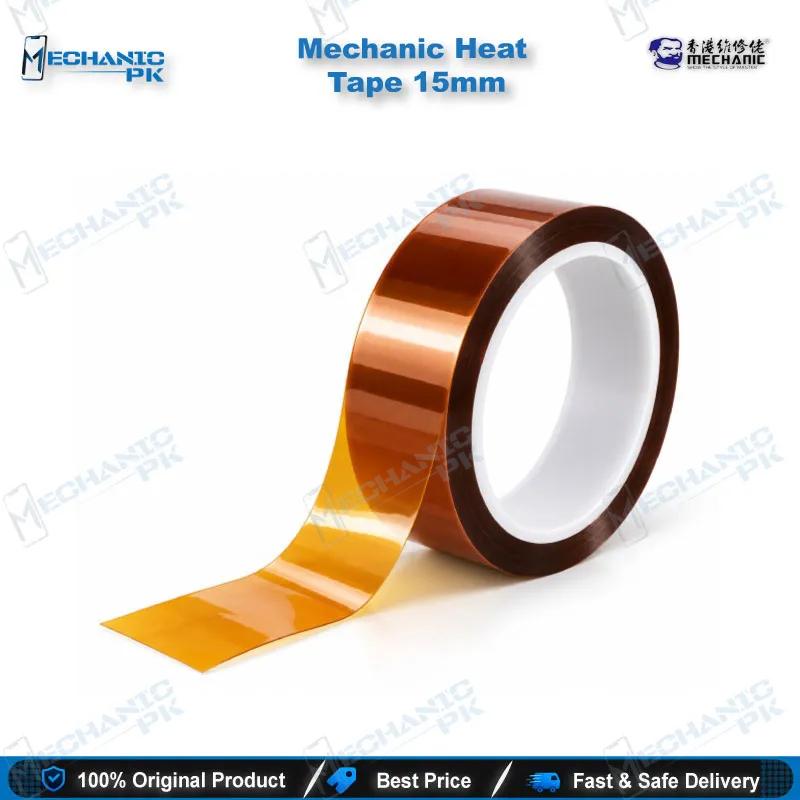
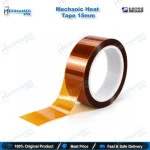
Mechanic Heat Tape 15mm – Polyimide Kapton Tape
₨ 350
Polyimide Heat Tape for Board Rework
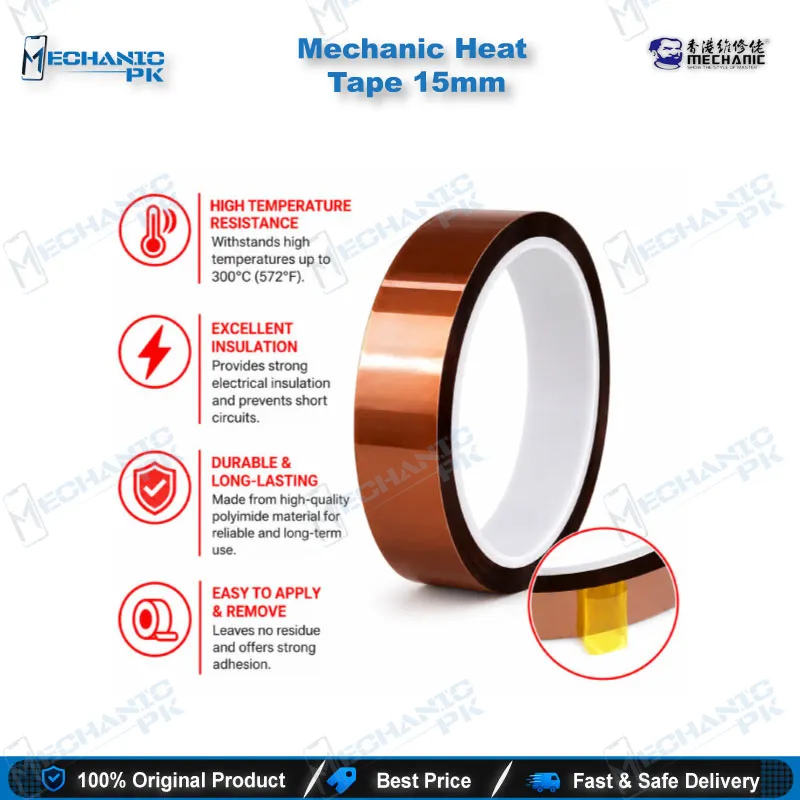
Mechanic Heat Tape 15mm is a polyimide film tape with a silicone adhesive layer, built for technicians who shield components during hot air rework. The 15mm width covers connector rows, flex cable edges and neighbouring ICs while you reflow or reball the target chip. The silicone adhesive grips the board, holds through repeated heat cycles and peels off without leaving glue on the PCB. Mechanic Heat Tape 15mm suits Android and iPhone motherboards, battery lines, FPC joints and general bench masking. Keep a roll beside your hot air station, reballing kit and PCB holder for cleaner, safer rework.
In stock
Mechanic Heat Tape 15mm for Mobile Repair Rework
Mechanic Heat Tape 15mm gives your repair bench a dependable thermal shield for every hot air job. When you lift a CPU, eMMC or charging IC, the heat spreads across the board and softens neighbouring solder joints, plastic connectors and flex cable edges. A strip of Mechanic Heat Tape 15mm sits between that airflow and the parts you want to leave untouched. The roll pairs polyimide film, the Kapton-type material electronics technicians trust for masking, with a silicone adhesive that releases cleanly. Mechanicpk stocks this roll for workshops, service centers and training labs across Pakistan that run reflow, reballing and soldering jobs every day.
Polyimide Film and Silicone Adhesive Construction
Polyimide keeps its shape at soldering and hot air temperatures where ordinary masking tape curls, melts or leaves a sticky smear on the PCB. The silicone adhesive bonds firmly to solder mask, metal shields and plastic housings, then lifts off without residue, so you avoid the extra cleaning pass with flux remover and a brush. The film also insulates electrically, which lets you cover exposed contacts and bare pads while you work nearby. The roll comes in a metallic brown finish, and the thin, flexible film lies flat over uneven board surfaces and wraps around component edges without lifting. You get one consumable that handles masking, securing and insulating on the same job.
Where the 15mm Width Fits in Your Rework Workflow
The 15mm width covers more area than the narrow 3mm to 10mm rolls and still gives you control around small parts. Use it to shield a full row of board-to-board connectors, mask a battery connector, or cover the plastic side of a camera or display socket while the hot air nozzle works on the chip beside it. During BGA reballing, a strip of tape can hold a stencil steady against the chip so it does not shift while you spread paste or place balls. On a dead phone with a suspected eMMC or CPU fault, the tape protects the surrounding ICs while you reflow the suspect one under your microscope. Pair it with your hot air station for airflow control and a PCB holder for a stable board.
Placement Tips for Hot Air and Soldering Work
Press the tape down with tweezers so no air pockets form at the edge facing the nozzle, because trapped air lifts the film under hot airflow. Overlap two strips by a few millimetres when you need to cover a wide zone. Keep the nozzle moving and set your station to the temperature your solder alloy and chip demand, since the tape protects neighbouring parts but does not replace sound heat management. For wire repairs near a soldering station tip, wrap the tape around the bare lead to insulate it and anchor it in place. Peel the tape slowly at a low angle after the board cools, so it releases without pulling up solder mask.
Repair Scenarios That Call for a 15mm Roll
Charging issue jobs often involve a charging port, a charging IC and a flex cable within a few millimetres of each other, and 15mm tape covers that cluster in one pass. A boot loop issue or hang on logo fault that leads you to reflow memory chips benefits from the same shielding on nearby power ICs. Hardware fault diagnosis with a multimeter also goes smoother when you tape off test points you do not want to bridge by accident. Technicians who already stock reballing kits, microscopes and soldering stations add this roll as a low-cost consumable that prevents expensive board damage. Order several rolls if your shop runs reflow jobs daily, because the tape disappears quickly on a busy bench.
| Weight | 0.8 kg |
|---|
Key Features
- Polyimide film built for soldering and hot air rework conditions
- Silicone adhesive grips firmly and peels off without leaving residue
- 15mm width covers connector rows and wide shield zones in one strip
- Thin, flexible film conforms to uneven board surfaces
- Electrically insulating film protects exposed contacts and wire leads
- Holds reballing stencils steady during paste and ball placement
- Works across Android and iPhone boards without device restrictions
- Fits beside hot air stations, soldering stations and PCB holders on the bench
Specifications
| Brand | Mechanic |
|---|---|
| Category | Repair Accessories – Heat Resistant Tape |
| Compatibility | Universal — not device-specific |
| Supported Devices | Universal — works on any phone motherboard or PCB that needs heat shielding |
| Technology | Polyimide (Kapton-type) film with silicone adhesive |
| Material | Polyimide film, silicone adhesive |
| Dimensions | 15mm width |
Common Repair Uses
- Real bench scenarios where a 15mm polyimide tape shields, holds or insulates
- Shielding neighbouring ICs during hot air IC removal
- Masking connectors and plastic sockets during reflow
- Holding a BGA stencil steady during reballing
- Protecting flex cable edges near heat
- Insulating bare wire leads and jumper wires after soldering
- Covering test points while probing with a multimeter
- Securing small parts and flex cables during board assembly
- Masking board areas during cleaning and coating work
Compatible Devices
- Universal — not device-specific; the tape shields any board regardless of brand or chipset
- Android smartphone motherboards (Samsung, Oppo, Vivo, Infinix, Tecno)
- iPhone logic boards
- Qualcomm and MediaTek based phone boards
- Tablet motherboards
- Laptop and small-device PCBs
- Battery connectors and FPC cable joints
- eMMC and UFS board areas during chip reflow
- Charging port and charging IC zones
FAQ
What is the product name?
What is the brand of this product?
What is the model of this product?
What is this product used for?
Which devices are compatible with this product?
Who should use this product?
Is Mechanic Heat Tape 15mm suitable for hot air rework on mobile boards?
Will the tape leave residue on the PCB after you peel it off?
Related products