














Mechanic PWR Grinder Electric Pen for Mobile Repair
₨ 1
Cordless Electric Grinding Pen for Phone Boards
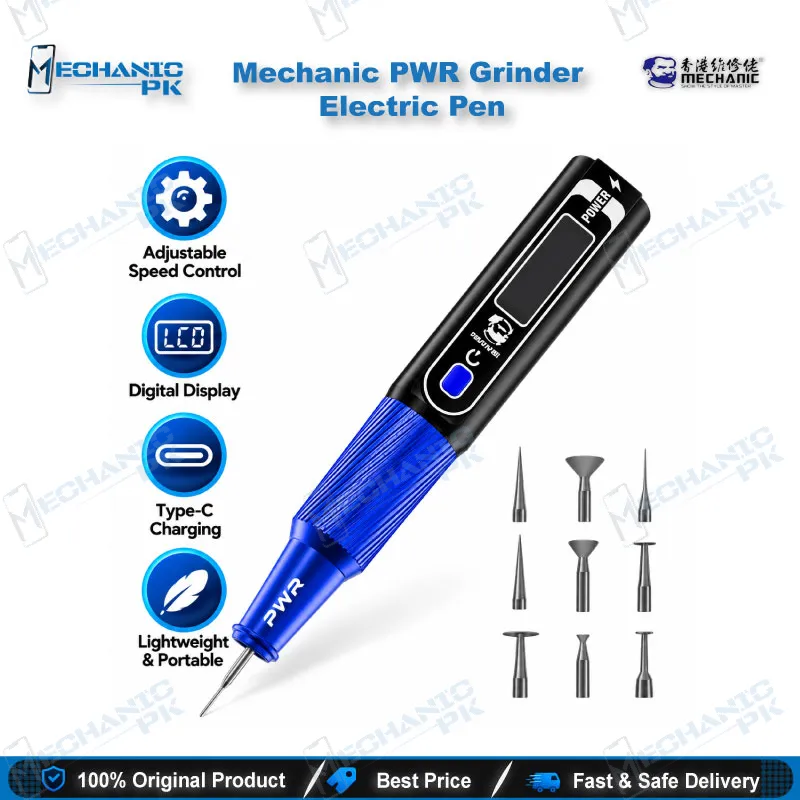
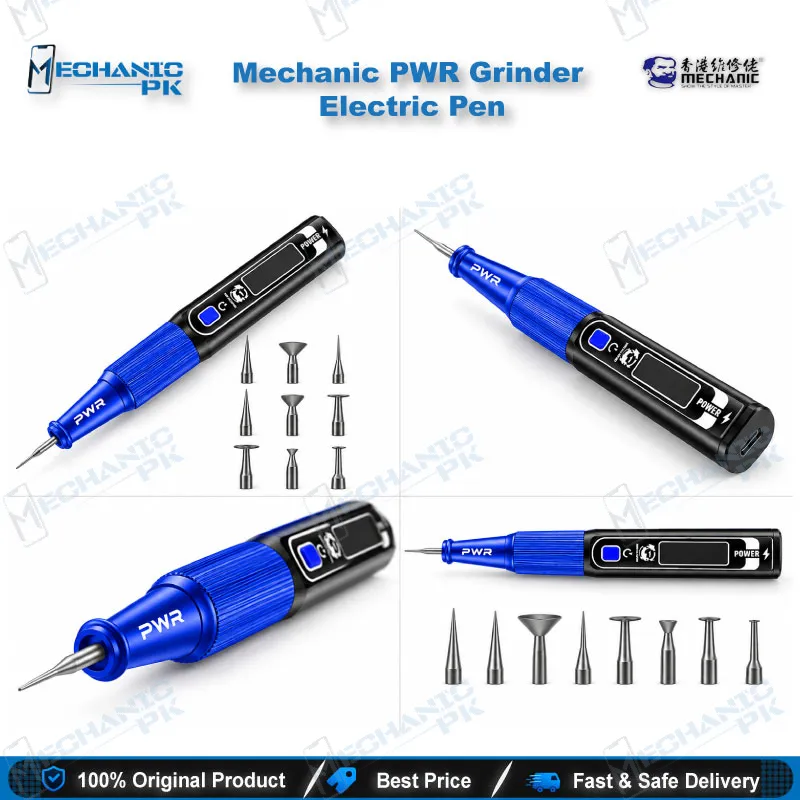
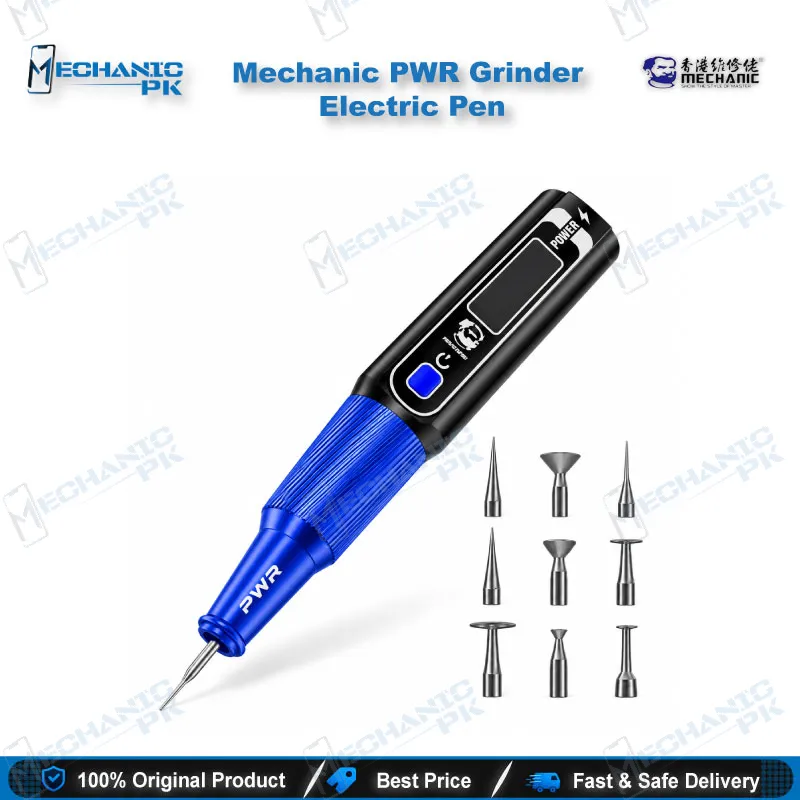
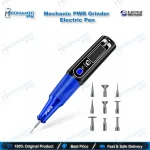
The Mechanic PWR Grinder Electric Pen is a cordless 37,000 RPM grinding and polishing pen for mobile phone motherboard work. Double ball bearings and an all-metal transmission give a quoted 0.01 mm runout, so you grind CPU and BGA chip surfaces, cut board sections, remove brackets and back out screws with control. A 1200mAh battery runs about 120 minutes per charge and recharges over Type-C. The set includes the pen, nine emery heads and a Type-C cable. Repair shops and technicians across Pakistan use it as a compact chip grinding pen on the bench.
Out of stock
Mechanic PWR Grinder Electric Pen for Chip Grinding and Board Cutting
The Mechanic PWR Grinder Electric Pen is a cordless rotary pen that handles the mechanical prep work on a mobile phone board: grinding cured glue off a CPU or BGA chip, cutting a board section, lifting a bracket and backing out a stubborn screw. A built-in motor spins up to 37,000 RPM and drives interchangeable emery heads, so one pen replaces a drawer of hand files and blades. If you run a repair bench in Pakistan and want a chip grinding pen with a clear spec sheet instead of a generic engraver, this pen gives you a compact 150 x 26 x 24 mm body, a 1200mAh battery and Type-C charging. You hold it like a marker and control it like one.
Motor, Bearings and Precision Control
Mechanic builds the PWR with double ball bearings and an all-metal transmission structure, and the manufacturer data quotes a runout of 0.01 mm. That figure matters when you cut BGA sealant around a CPU or grind an oxide layer off a pad, because a wobbling head tears through solder mask and traces in a single pass. The high-torque motor holds its speed under load, so the head keeps cutting when you press into hardened glue instead of stalling and skipping across the board. Low vibration keeps your wrist steady under a microscope, where you judge depth in fractions of a millimetre. The pen weighs 100 g net, light enough for long sessions on a stack of boards. Use light pressure and let the head do the cutting. Check progress under magnification every few seconds and stop as soon as the sealant clears. Short passes protect the pads and the neighboring components.
Where It Fits in the Board-Level Repair Workflow
Most boards that reach the bench with a hardware fault need a mechanical step before any soldering starts. On a dead phone with glued shields, you remove the bracket and screws first, then grind or cut to expose the area underneath. On a CPU or eMMC job, you grind the sealant around the chip, move to your hot air station for the lift, and finish with a reballing kit and a clean pad. For frame correction, you fit a suitable head and relieve a bent edge. After the heavy work, you polish pad surfaces and clear residue so your soldering station and flux can do their job. Keep a PCB holder and a multimeter close: the holder locks the board during the grind, and the multimeter confirms continuity on the pads afterward. Technicians chasing a charging issue, display problem, network issue or hang on logo fault on a glued board reach for a tool like this before they pick up the iron. As your workload grows, the natural upgrade path is a bench microscope and a stronger hot air station.
Battery, Charging and Package Contents
A 1200mAh lithium battery sits inside the pen and delivers about 120 minutes of working time per charge. You charge it through a Type-C port, so the cable already on your bench does the job. Charge the pen before a long grinding session, because a drained battery slows the head and tempts you to press harder. That runtime covers several repair jobs back to back and removes the cord that drags across the board while you work. The set ships with the grinding pen, nine emery heads and a Type-C cable. The nine heads cover chip grinding, motherboard cutting and bracket work, and you swap them as the job changes. Switch the motor off and wait for a full stop before you change a head, and store the pen where the temperature stays below 50 degrees Celsius. Mechanicpk supplies the Mechanic PWR Grinder Electric Pen to technicians, repair shops and service centers who want a dependable grinding pen on every bench.
| Weight | 0.100 kg |
|---|
Key Features
- Built-in high-torque motor with a maximum speed of 37,000 RPM
- Double ball bearings with an all-metal transmission for a quoted 0.01 mm runout
- Low-vibration operation for controlled chip and pad work
- 1200mAh lithium battery with about 120 minutes of runtime
- Type-C charging
- Nine emery heads included for grinding, cutting and polishing
- Compact 150 x 26 x 24 mm pen body at 100 g net weight
- Multi-purpose design for chip grinding, board cutting, bracket and screw removal, and frame correction
Specifications
| Brand | Mechanic |
|---|---|
| Model | PWR |
| Category | Electric Grinding / Sanding Pen (Polishing Tools) |
| Compatibility | Universal hand tool, not device-specific; works with the supplied emery heads |
| Supported Devices | Mobile phone motherboards, CPU/BGA chips, PCB boards |
| Technology | High-torque motor up to 37,000 RPM, double ball bearings, all-metal transmission, built-in 1200mAh lithium battery with Type-C charging |
| Dimensions | 150 x 26 x 24 mm |
| Weight | 100 g net (197 g gross) |
Common Repair Uses
- Verified workflows for this pen
- CPU and BGA chip grinding
- Cutting BGA sealant before a chip lift
- Grinding the oxide layer off pads
- Motherboard cutting
- Bracket removal
- Screw removal
- Frame correction
- Polishing and engraving small surfaces
Compatible Devices
- Universal — not device-specific. Works on the following work surfaces:
- Mobile phone motherboards (all brands)
- CPU and BGA chip surfaces
- IC chip surfaces with glue or sealant
- PCB boards and board sections
- Metal brackets and shields on phone boards
- Screws on phone boards and frames
- Phone frames needing correction
- Pad surfaces with oxide layers
FAQ
What is the product name?
What is the brand of this product?
What is the model of this product?
What is this product used for?
Which devices are compatible with this product?
Who should use this product?
How long does the battery last and how do I charge the Mechanic PWR pen?
Can this pen cut BGA sealant and grind pad oxide before a CPU or IC change?
Related products